Cookie settings
We use our own and third-party cookies in order to offer our services, display videos, obtain statistics and offer personalized advertising.
For more information, please read our cookies policy.
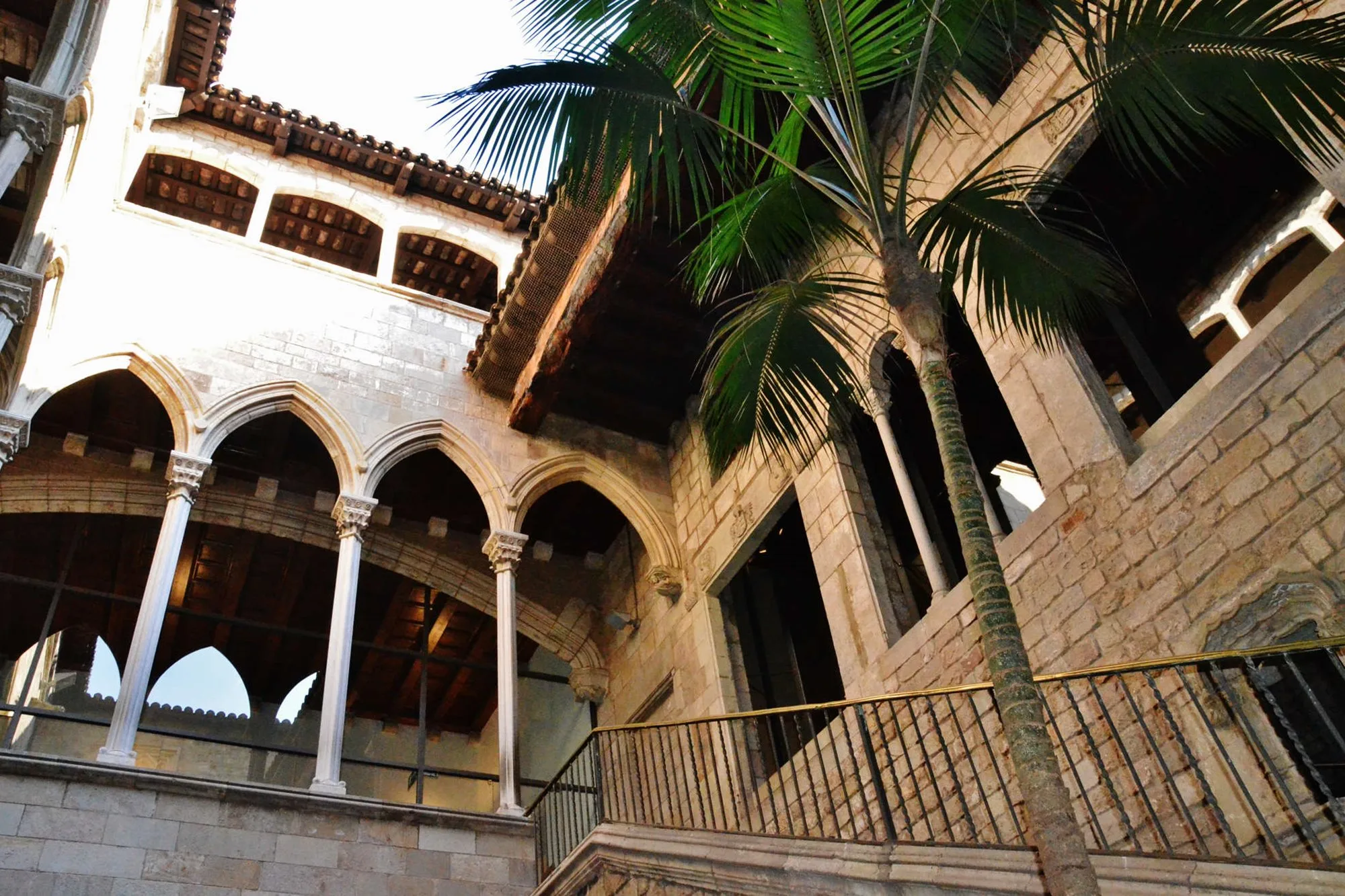
The Picasso Museum consists of five large palaces on Montcada Street. They date back to the 13th and 14th centuries, being fine examples of civil Gothic in Catalonia, although with significant 18th-century reconstructions.
- Aguilar Palace (Montcada, 15). It belonged to several noble generations of the Aragonese court during the 13th and 14th centuries. In 1386 it became the property of the Coromines-Desplà, members of the high bourgeoisie of Barcelona, who decided to sell it fourteen years later to the merchant Berenguer de Aguilar. After being owned by the Clerch and Pons families in the 19th century, the Barcelona City Council bought it in 1953 to restore it. The 15th-century central courtyard, its open staircase, the pointed arches, and the flamboyant Gothic sculptures are still preserved. The Gothic coffered ceilings of the first floor are also still present. During the restoration carried out in the building in the 1960s, the remains of a large fresco on the conquest of Majorca by James I in 1229 were found. The painting was transferred to its current location, the National Art Museum of Catalonia.
- The Baron of Castellet Palace (Montcada, 17). Its name is due to its owner, the Baron de Castellet, a title received by Marià Alegre d’Aparici and d’Amat from King Charles IV. This baron was the one who renovated this palace, structured around a central courtyard. On the facade, there is a 16th-century religious relief. Its main floor has a large Neoclassical hall. The origins of this palace lie in the 13th and 14th centuries. In the 16th century, it belonged to the Girona lineage. Between the 16th and 18th centuries, different aristocratic and bourgeois families owned it. The Baron of Castellet ordered the construction of a large Neoclassical hall on the main floor in the mid-18th century. In this hall, marble elements and polychrome reliefs in classical and baroque style are intermingled, giving it European classicist sumptuousness. In 1831, after the baron's death, this hall was bequeathed to the Hospital de la Santa Creu. The palace was rented to several tenants in the 19th century until the Rius family bought it. Finally, it became the property of the Barcelona City Council in the 1950s.
- Meca Palace (Montcada, 19). Dated from the 13th and 14th centuries, renovated in the 18th century. Also an example of a medieval house-palace typology arranged around a central courtyard. On the main floor, medieval polychrome coffered ceilings can be seen, while the decorated ceilings are from the 19th century. It is known from the oldest documentation found that in 1349 this palace was owned by Jaume Cavaller, chief councilor of the Barcelona City Council, whose daughter Felipona married Ramon Desplà, a politician who turned the palace bearing his name into the most important building on the block. The Cassador lineage owned this palace in the 16th century, as did its successors, the marquises of Ciutadilla. The widow of Josep Meca Cassador sold it to the merchant Segimon Milans in 1719, who carried out the great renovation of the building after it had suffered considerable damage in the bombing five years prior. In 1901 this palace was bequeathed to the Brothers of Christian Doctrine. It was when the Montepío de Santa was established there, becoming part of the social work of a banking entity. This social work and the Barcelona City Council signed the palace's transfer agreement in 1977, prompting the resumption of the Picasso Museum's renovation and expansion in 1981. This renovation served to unite three palaces: Meca, Aguilar, and the Baron of Castellet.
- Mauri House (Montcada, 21). It is settled on structures from the Roman era, specifically one of the villas of the Barcino colony. Its facade features an 18th-century wooden lattice, the only one that has survived to this day in Barcelona. The rooms are distributed around a central courtyard, presumably originating from the 13th century. Documental evidence only points to its ownership by the Rocha family between 1378 and 1516, and by F. Casamada in 1716. In 1872 it was joined to the neighbouring Finestres house, its owner being Josep Vidal Torrents. From that moment on, the building had industrial uses. Confiterías Mauri acquired it in 1943 and in 1999 it became part of the Picasso Museum.
- Finisterres Palace (Montcada, 23). It was built on the remains of a Late Roman necropolis. It is articulated around a central courtyard and its characteristic exterior staircase giving access to the main floor is noteworthy. The ground floor retains several rooms with beautiful arches. The first floor features two triforium windows with small columns. From the original construction, the coffered ceiling is preserved, dating from the late 19th and early 14th centuries. The upper floor stands out for having a raised floor and a solarium. Between the 15th and 18th centuries, the galleries of semicircular arches that crown its interior were added. From 1363 to 1516 it was owned by the Marimon family. In 1698 the Dalmases family acquired it. In 1970 it became the property of the Barcelona City Council and today it hosts the temporary exhibitions of the Picasso Museum.
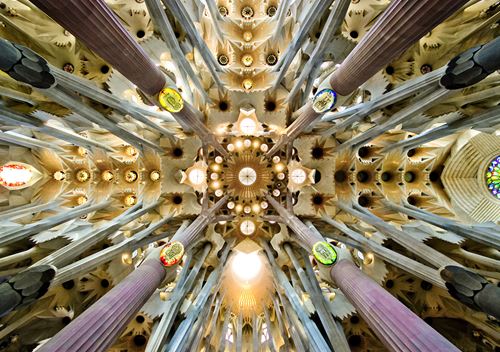
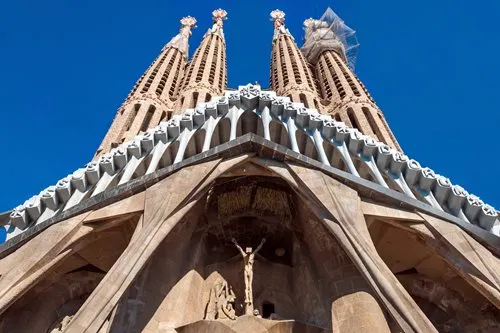
This guided tour will show you La Sagrada Familia of Barcelona. You'll have fast track without waiting queues.
We will talk about the history, outside and inside decoration and its oustanding colums, vaults and rich details.
Besides, in the Sagrada Familia's Museum we will learn about its designer, Antoni Gaudí. At the end of the tour, you'll have free time inside the monument to enjoy it on your own.
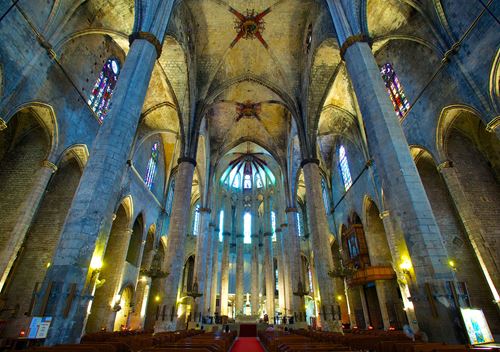
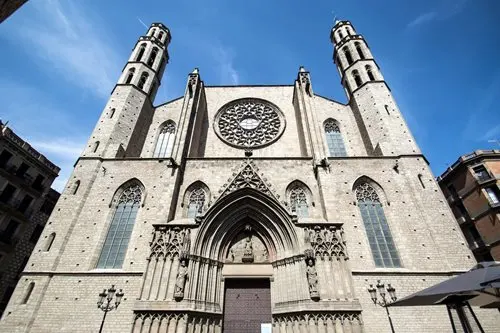
This literary tour will let you relive the stories of this exciting novel through its different locations; places that after almost 700 years we will revisit from a different perspective whilst admiring the Gothic Quarter of Barcelona. This is a unique opportunity to learn more about the characters and about one of the most emblematic monuments of Barcelona, Santa Maria del Mar, the apogee of Catalan Gothic art.
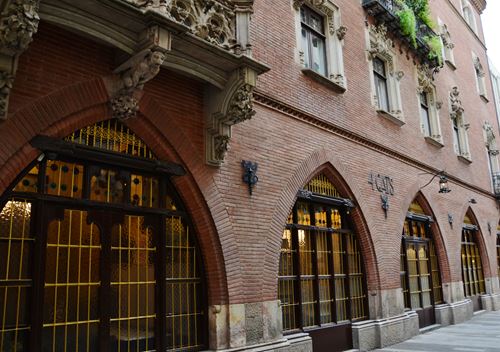
You can read any book, but just with few it's possible to live and breathe them. We present this walking tour as a unique opportunity to wander around the amazing Barcelona depicted in "The Shadow of the Wind", a novel that has captivated thousands of readers all around the world. From letters to words, from imagination to reality.
Address and telephone
Opening times
Prices
If you see any mistakes or want to add anything to this information, please contact us.
This guided tour will show you La Sagrada Familia of Barcelona. You'll have fast track without waiting queues.
We will talk about the history, outside and inside decoration and its oustanding colums, vaults and rich details.
Besides, in the Sagrada Familia's Museum we will learn about its designer, Antoni Gaudí. At the end of the tour, you'll have free time inside the monument to enjoy it on your own.
This literary tour will let you relive the stories of this exciting novel through its different locations; places that after almost 700 years we will revisit from a different perspective whilst admiring the Gothic Quarter of Barcelona. This is a unique opportunity to learn more about the characters and about one of the most emblematic monuments of Barcelona, Santa Maria del Mar, the apogee of Catalan Gothic art.
You can read any book, but just with few it's possible to live and breathe them. We present this walking tour as a unique opportunity to wander around the amazing Barcelona depicted in "The Shadow of the Wind", a novel that has captivated thousands of readers all around the world. From letters to words, from imagination to reality.
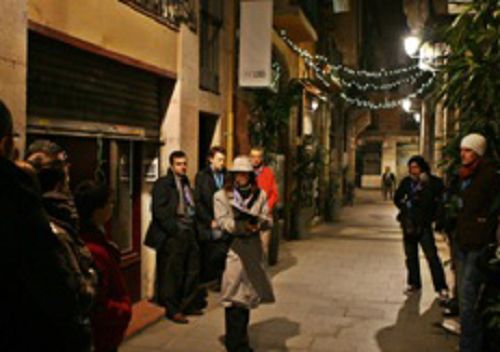
What do the streets of Barcelona hide when night falls? Which stories marked our ancestor’s lives forever? Let yourself become absorbed by the paranormal mysteries of Barcelona with the explanations of an experienced guide.
The Ghost Walking Tour is a night visit around Sant Pere, Santa Caterina and la Ribera quarters, based on the book “Fantasmes de Barcelona” written by Sylvia Lagarda-Mata.
The tour tells the mysterious and hair-raising stories that have been taking place in those areas for decades.
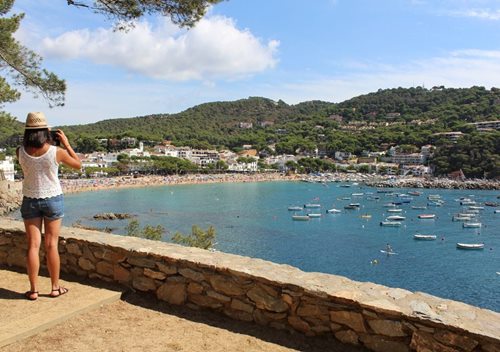
Would you like to spend a day visiting typical towns of the Costa Brava? Book now this day trip from Barcelona and you will discover enchanting places: the typical fishing village of Calella de Palafrugell, and Llafranc as well. You will visit the medieval city of Pals.
This will be an amazing tour in a comfortable bus with free Wi-Fi.
Enjoy your holidays in Catalonia. No matter how short your stay in Barcelona, make a getaway to the Costa Brava.
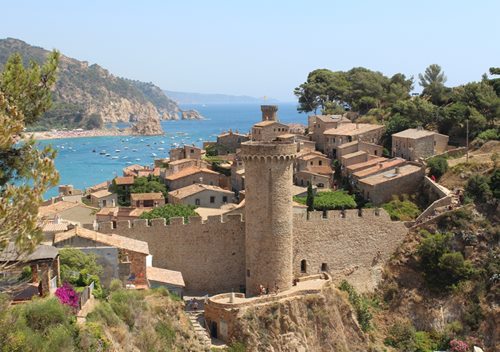
If you’re on holidays in Barcelona and you’d like to make a getaway, book now this Half Day tour to the Costa Brava. This is an 8-hours-excursion to visit along with a professional guide the emblematical and touristic villages of Lloret de Mar and Tossa de Mar. You’ll fall in love of its enchanting cliffs, landscapes and monuments.
Afterwards, this trip includes the tickets of boat to Tossa de Mar and visit to other essential sites, such as the Vila Romana dels Amettlers.
You’ll go on board of a comfortable bus with free Wi-Fi and multilingual audioguide.
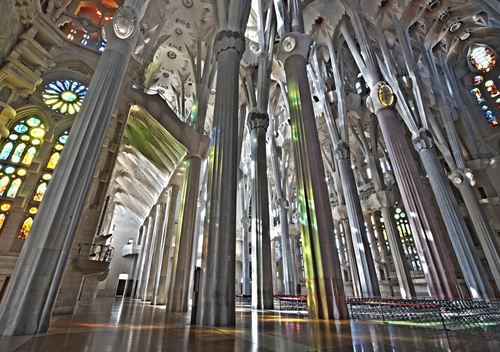
The Sagrada Familia is an architectural Gaudi’s Modernism jewel and the most emblematic building in Barcelona.
Here you are the choice of visiting it in the best moment of the day and in small group up to 6 people. You could access to this Basilica at the less fluency of sightseers time and an official guide explain you all its details and curiosities in exclusive for your group. The guide will be at your disposal for attending any question whatever you want to do.
Don’t worry about the tickets. You only have to reserve your visit and the tour company will run of all including the start time confirmation.
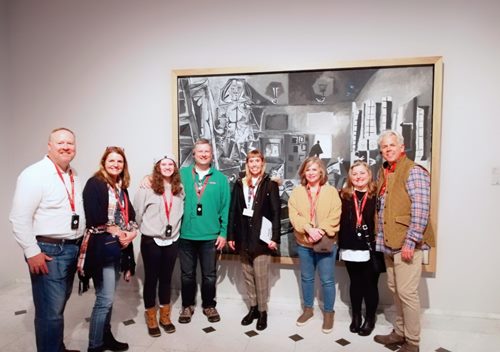
Enter and discover the biggest Picasso’s artworks collection in its Museum of Barcelona. Do it with this small group tour by an Art expert guide.
Moreover, the skip-the-line ticket is guaranteed. Don’t worry about nothing. You only have to book your and enjoy of contemplate the paintings of the main Spanish Cubism artist along with an expert.
Only in English!
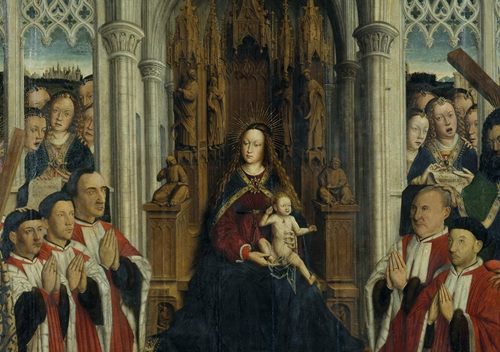
Delve into Catalan art with this private tour at the National Art Museum of Catalonia.
You will begin in the museum's stunning hall, where an introduction will be given. You will explore the Romanesque art galleries, admiring the impressive medieval mural paintings preserved here. Next, you’ll move on to Gothic art, discovering its intricate altarpieces. The journey continues through modern art with works by Gaudí, Miró, and Casas.
Additionally, the guide will share anecdotes and details to help you gain a deeper understanding of the history of Catalan art. The tour will also be tailored to your specific interests.
Don’t miss this visit if you are an art lover, set in the privileged location of Montjuïc in Barcelona.