Cookie settings
We use our own and third-party cookies in order to offer our services, display videos, obtain statistics and offer personalized advertising.
For more information, please read our cookies policy.
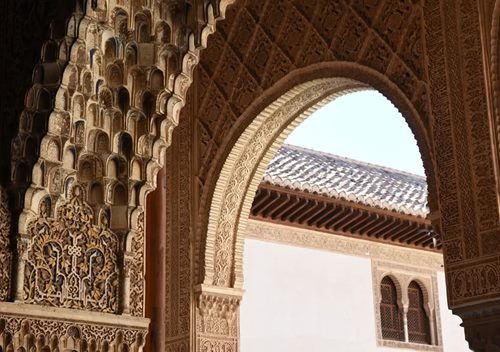
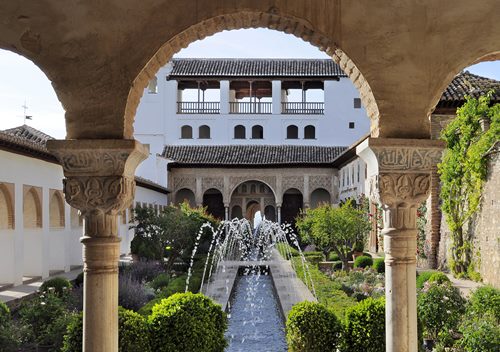
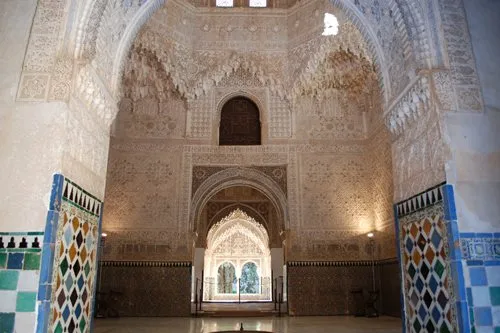
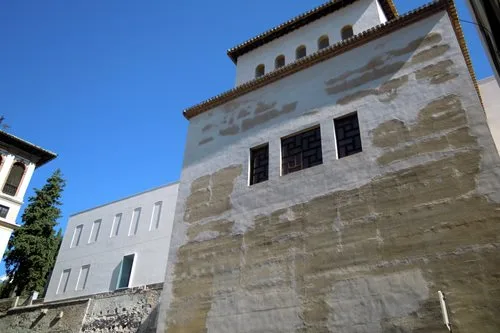
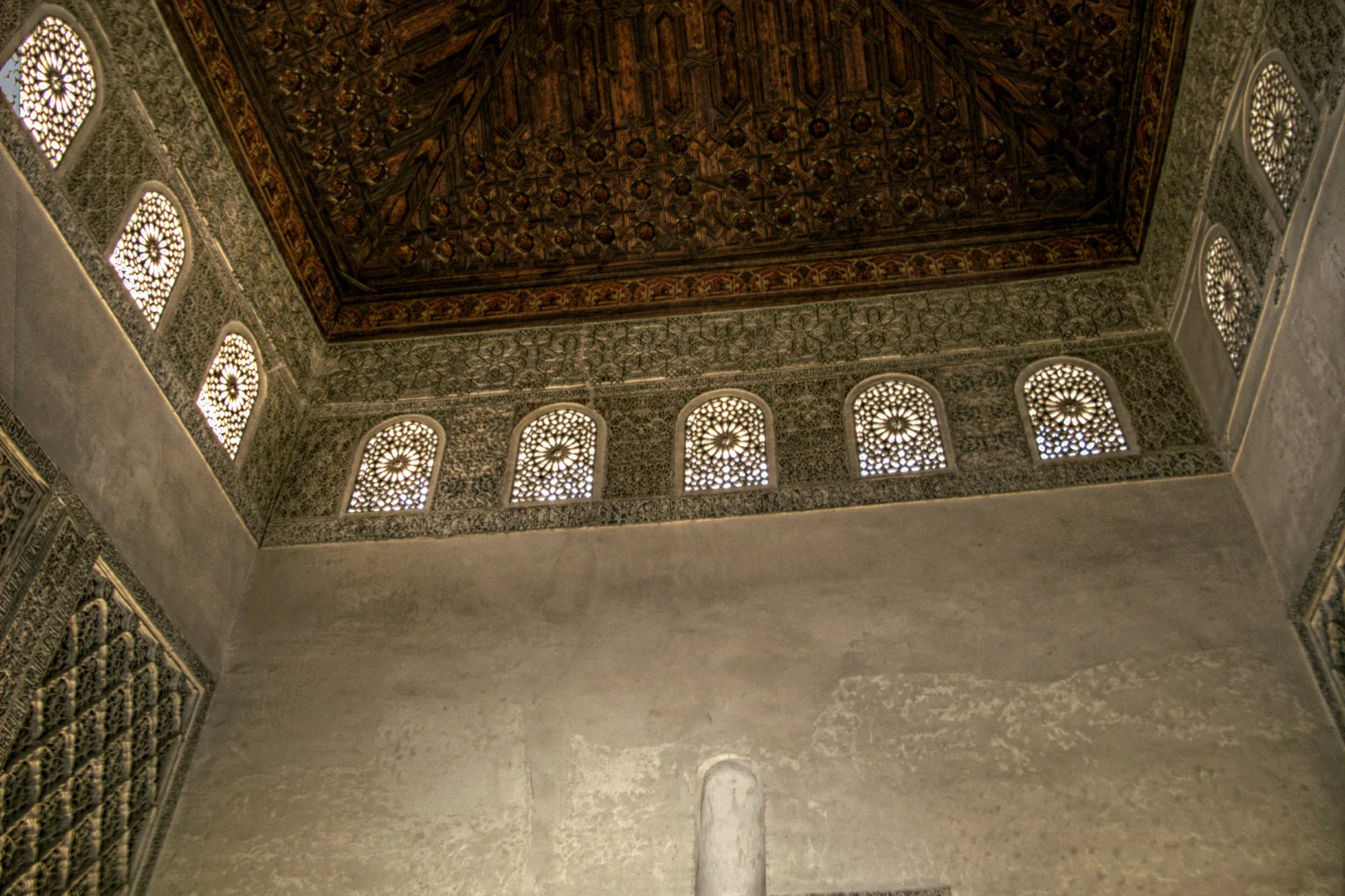
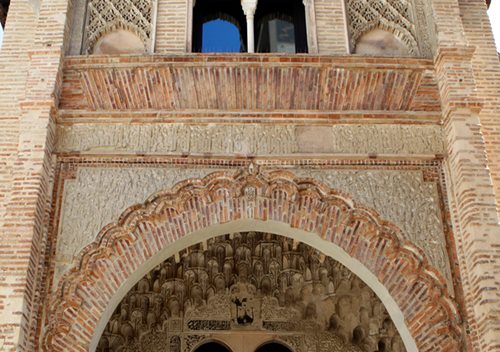
The Cuarto Real de Santo Domingo, also called the Almanxarra Palace or Almanxarra Palace, is an ancient Muslim palace (Dar al-Bayda). Located at Plaza de los Campos number 6 in Granada, at the corner where this square meets the Cuesta de Aixa. It is next to the wall that enclosed the Rabad al-Faijarin (Potters' Quarter) neighbourhood.
Originally, it was the Huerta Grande de la Almanjarra, an almunia founded at the end of the Almohad period according to studies. Thus, it is the only remaining testimony of a royal almunia preserved within what was the ancient city of Granada. A key building in the transition from post-Almohad art to Nasrid art. It was possibly built during the time of Muhammad II (1273-1302).
Queen Aixa (mother of Boabdil), sold it to the Catholic Monarchs after their conquest of the city. In turn, Monarchs Isabel and Fernando, gave it to the Order of Preachers of Santo Domingo, to construct the Convent of the Holy Cross, along with its orchards.
It was from this moment, that the building acquired a new Christian function.
At the beginning of the 16th century, the friars adapted the Cuarto Real de Santo Domingo as a provisional church.
In 1512, a Royal Charter was issued, authorising the corregidor of Granada to open a postern in the wall so that neighbours could hear Mass in the Monastery of Santa Cruz.
In 1567, the transfer of land to the Brotherhood of Our Lady of Sorrows was approved.
Already in 1701, the Beaterio de Santo Domingo was founded, next to the Convent of Santa Cruz la Real.
In 1810, with the French Invasion, the convent suffered looting; but its assets were recovered by the prior of the community three years later. At the end of the 19th century, after the Disentailment of Mendizábal, this nucleus was demolished to construct the current 19th-century-style mansion.
Before being demolished, in the 1830s, the building housed various museum institutions: in 1839, the Provincial Museum was accommodated in the upper halls of the main patio; and a year later, the Academy of Fine Arts of Our Lady of Sorrows was inaugurated.
It has been declared a Site of Cultural Interest (BIC) since 1919, and since 1990 it has been owned by the Granada City Council. At the beginning of the 21st century, it was restored by architects Antonio Almagro, and Antonio Orihuela. In May 2015, it was reopened to the public.

4 reviews
Would you like to know truly Granada?
In this walking tour: Albayzin and Sacromonte we will take a walk through the Granada's Historical districts. We will discover the Granada's history and the artistic details of its buildings.
Don't join us?
Address and telephone
Opening times
Prices
Free entry.
If you see any mistakes or want to add anything to this information, please contact us.


4 reviews
Would you like to know truly Granada?
In this walking tour: Albayzin and Sacromonte we will take a walk through the Granada's Historical districts. We will discover the Granada's history and the artistic details of its buildings.
Don't join us?
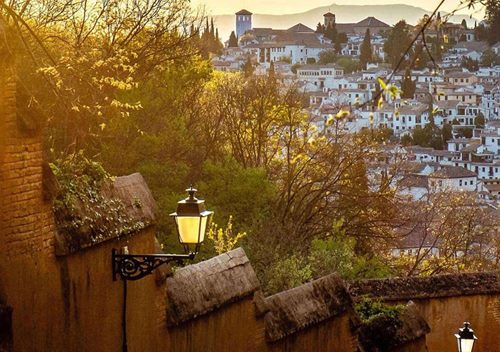
Can you imagine walking through Granada with a guide just for you and choosing your preference route?
Well, it is possible with these private routes. You can choose between the Historic Center and Albayzín, Albayzín and Sacromonte, or just one of these last two historic neighborhoods declared a World Heritage Site. For more than two hours you will enjoy an exclusive guided tour just for you and yours.
For your next visit to Granada, don't hesitate and book your private route.
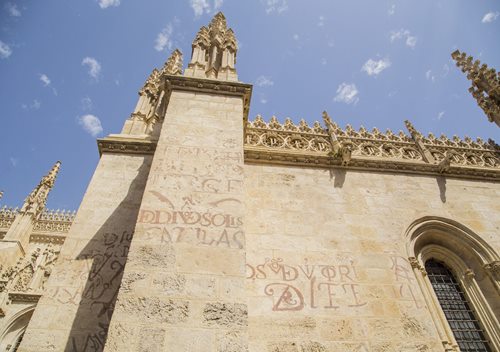
There are two monuments, which are the most visited after the Alhambra, essential to truly understand Granada: the Cathedral and the Royal Chapel. They are a symbol of the history and transformation of the city and Spain after the conquest of Granada by the Catholic Monarchs.
Don't miss out on discovering all their details and book your guided tour. You will visit both buildings and the historic center with a guide who will explain how Granada changed between the 15th and 16th centuries.
You will learn anecdotes you never imagined. Additionally, tickets are included in the price.
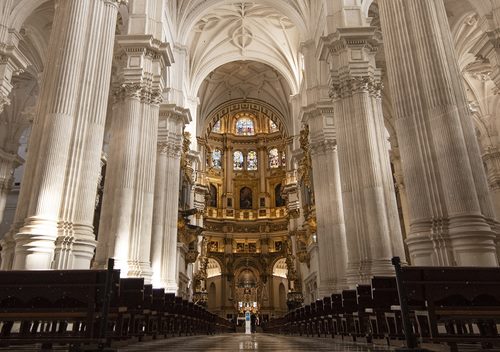
Step into two of Granada’s most iconic landmarks: the Renaissance Cathedral and the Royal Chapel, resting place of Queen Isabella and King Ferdinand.
Discover stunning art, historic architecture, and the legacy of Spain’s Catholic Monarchs. Uncover fascinating stories behind these sacred sites that shaped Spanish history.
Experience the grandeur and cultural heritage at the heart of Granada. Book your tour today and immerse yourself in the city’s religious and artistic treasures.
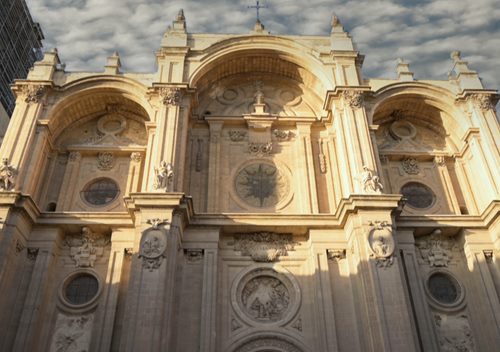
Skip the lines on this private tour of Granada Cathedral and the Royal Chapel with an expert guide.
Discover the beauty of Renaissance architecture and explore the artistic treasures inside.
Visit the tombs of Isabella I of Castile and Ferdinand II of Aragon, the Catholic Monarchs.
Learn the fascinating stories behind these iconic landmarks and their role in Spain’s history.
Enjoy a personalized experience at your own pace, fully immersing yourself in Granada’s religious and cultural heritage.
33 reviews
This Free Tour is ideal to discover the most emblematic places of the Granada city centre.
You will visit places as outstanding as Plaza Nueva, the Royal Chapel, the Cathedral, Alcaicería, or the Albaicín Bajo.
Do not pay anything now and put the price at the end of the route.

12 reviews
A perfect free tour to understand how changed Granada at the end of 15th Century after Catholic Kings conquest is walking through the historical neighbourhoods. A tour guide will carry to you to stroll the labyrinth and stoned streets of the Albaicin and the picturesque gypsy Sacromonte. Both neighbourhoods are declared World Heritage by UNESCO.
You'll fall in love of Granada and its leyends from the best Alhambra viewpoints.