Cookie settings
We use our own and third-party cookies in order to offer our services, display videos, obtain statistics and offer personalized advertising.
For more information, please read our cookies policy.
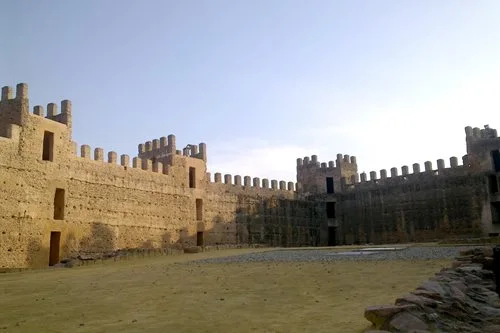
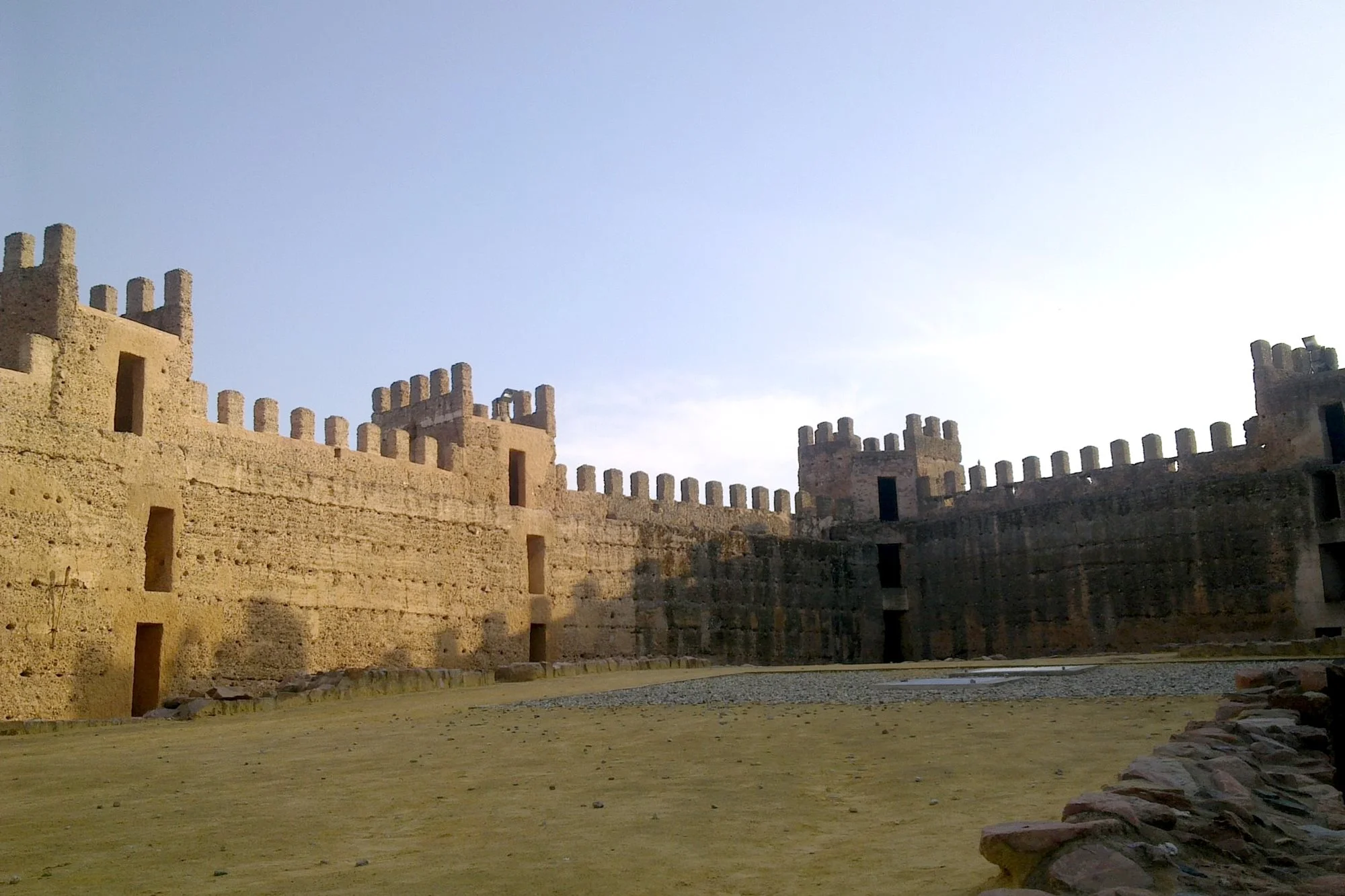
The Castle of Burgalimar (Bury al-Hamma, “Castle of the Baths”) is the symbol of Baños de la Encina (Jaén).
The Castle of Burgalimar is an Umayyad fortress from the 10th century, built on a small hill that dominates the town.
Today, we can see in the Castle of Burgalimar the most well-preserved fortified complex from the Caliphate of Cordoba. An excellent example of a fortress from its era. It is also one of the best-preserved Arab castles in Spain. Due to its historical and artistic values, it has been declared a National Monument since 1931 and a Site of Cultural Interest.
A robust crenellated and uninterrupted wall with fourteen towers surrounds and flanks the castle. In the Christian era, a fifteenth tower was built, which is the Keep.
Its founding plaque indicates that the construction of the castle was completed in the year 968 AD, under the rule of the Umayyad caliph Al Hakam I. This founding plaque was at the main entrance. This is a horseshoe arch flanked by two square-plan towers.
This castle is also known as the “Fortress of the Seven Kings”, having been visited by Alfonso VI, Alfonso VIII, Alfonso IX, Pedro II, Sancho VII, Fernando III, and Ferdinand the Catholic.
Built: 968 AD
Author: Anónimo
Style: Caliphal, Islamic military architecture
Category: Military
Type: Castle
Address and telephone
Opening times
Prices
Services
Guided Tours.If you see any mistakes or want to add anything to this information, please contact us.
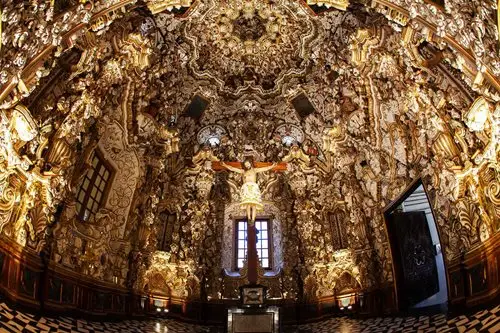
The Hermitage of Cristo del Llano is the third prominent monument in Baños de la Encina along with the Castle of Burgalimar and the Church of San Mateo.
It is located on the outskirts of the urban area. It consists of a single nave and its bell gable, which rises above the main facade. Its austere red brick exterior contrasts with its impressive interior.
Originally, it was built between the 16th and 17th centuries, but its most notable elements, as mentioned, date from the 18th century. These are the pictorial decoration of its vaults and the expansion of the apse to build the chapel for Cristo del Llano. This chapel is an example of the exuberant Andalusian Baroque, with its profuse decoration of painted plasterwork, mirrors, and sculptures.