Cookie settings
We use our own and third-party cookies in order to offer our services, display videos, obtain statistics and offer personalized advertising.
For more information, please read our cookies policy.
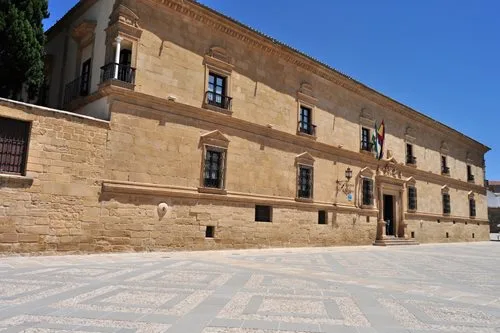
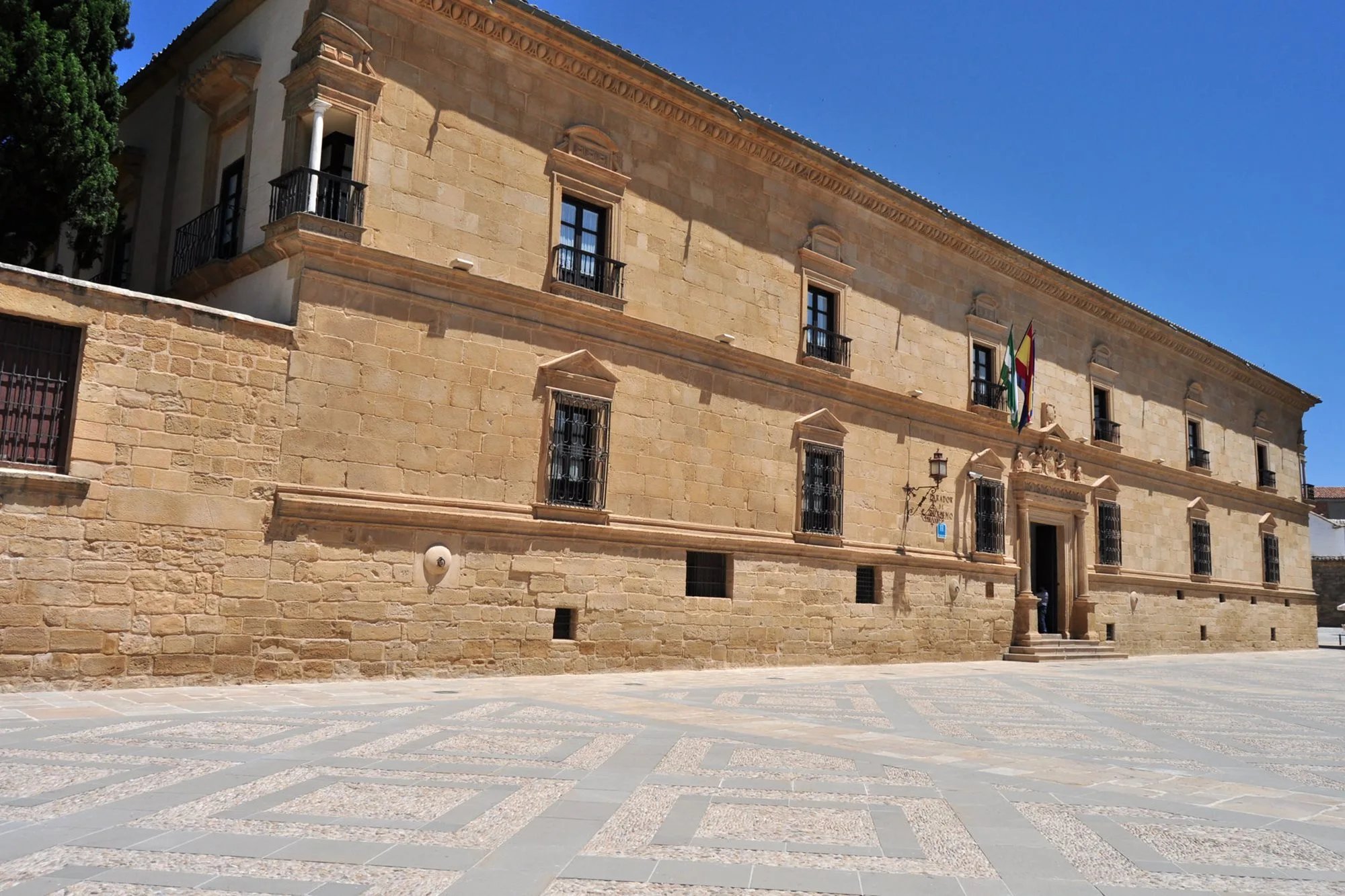
Also known as the Palace of the Marquis of Donadío, it is one of the most important Renaissance palaces in Úbeda. Since 1929, it has been a Parador Nacional de Turismo.
It is a clear example of the simplicity and sobriety of Castilian architecture at the turn of the 16th to the 17th century.
It was built in the mid-16th century by Andrés de Vandelvira, commissioned by Fernando Ortega Salido (dean of the Malaga Cathedral, Chantre of the Church of Santa María de los Reales Alcázares, and first chaplain of the Sacra Capilla del Salvador).
The layout of this palace is rectangular, like most that exist in Úbeda.
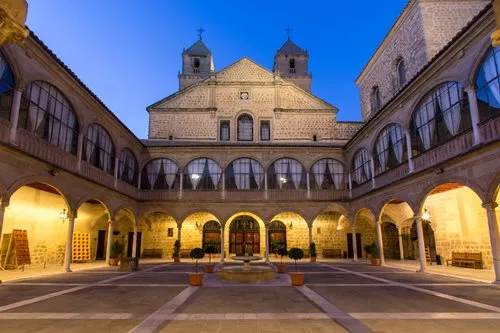
Its central courtyard is square and with a more intimate and elegant character. The galleries of the two floors of the palace overlook the courtyard through semicircular arches. The columns are influenced by Granada for their slenderness, thus uniting the Nasrid tradition with the Renaissance.
On the South side rises the main façade, divided into two horizontal sections. The main entrance is preceded by a staircase. It is lintelled and framed by two Doric columns on pedestals. Two angels crown it, holding the arms of D. Ezequiel Fernández de Liencres y Pando de Castañeda, I Marquis of Donadío, whose family owned this palace for a century.
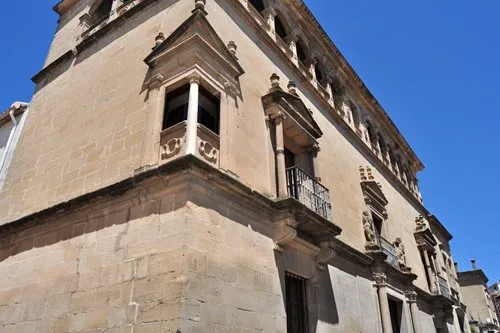
The windows of this palace are also of sober elegance, with a simple frame and triangular pediment on the ground floor; while on the upper floor they are topped with mixed linear pediments with a simple frieze in the centre.
Curiously, the rings for tying horses and corner balconies, very typical of the palaces of the era, also stand out on its exterior.
Built: 16th century.
Author: Andrés de Vandelvira
Style: Renaissance
Category: Civil
Type: Palace
Address and telephone
Opening times
Prices
If you see any mistakes or want to add anything to this information, please contact us.