We use our own and third-party cookies in order to offer our services, display videos, obtain statistics and offer personalized advertising. You can accept all cookies by clicking "Accept". If you want to refuse all or some of them, click "Cookie settings". For more information, please read our cookies policy.

Cookie settings
×

Cookie settings

We use our own and third-party cookies in order to offer our services, display videos, obtain statistics and offer personalized advertising.

Technical Cookies
These cookies allow the user to navigate the website and use the different options and services offered. InSpain.org uses its own and third-party technical cookies. Our website needs some technical cookies to work properly. These cookies cannot be disabled.
Analytical cookies
These cookies allow the tracking and the analysis of the behavior of website visitors. The gathered information is used for measuring the website activity and to develop statistics to further improve the website. InSpain.org uses third-party analytical cookies.
Behavioural advertising cookies
These cookies collect information about your browsing habits in order to make advertising relevant to you and your interests. InSpain.org uses its own and third-party behavioural advertising cookies.

For more information, please read our cookies policy.

Home / Provinces of Spain / Jaén / Úbeda / Attractions in Úbeda /

Palacio Vela de los Cobos

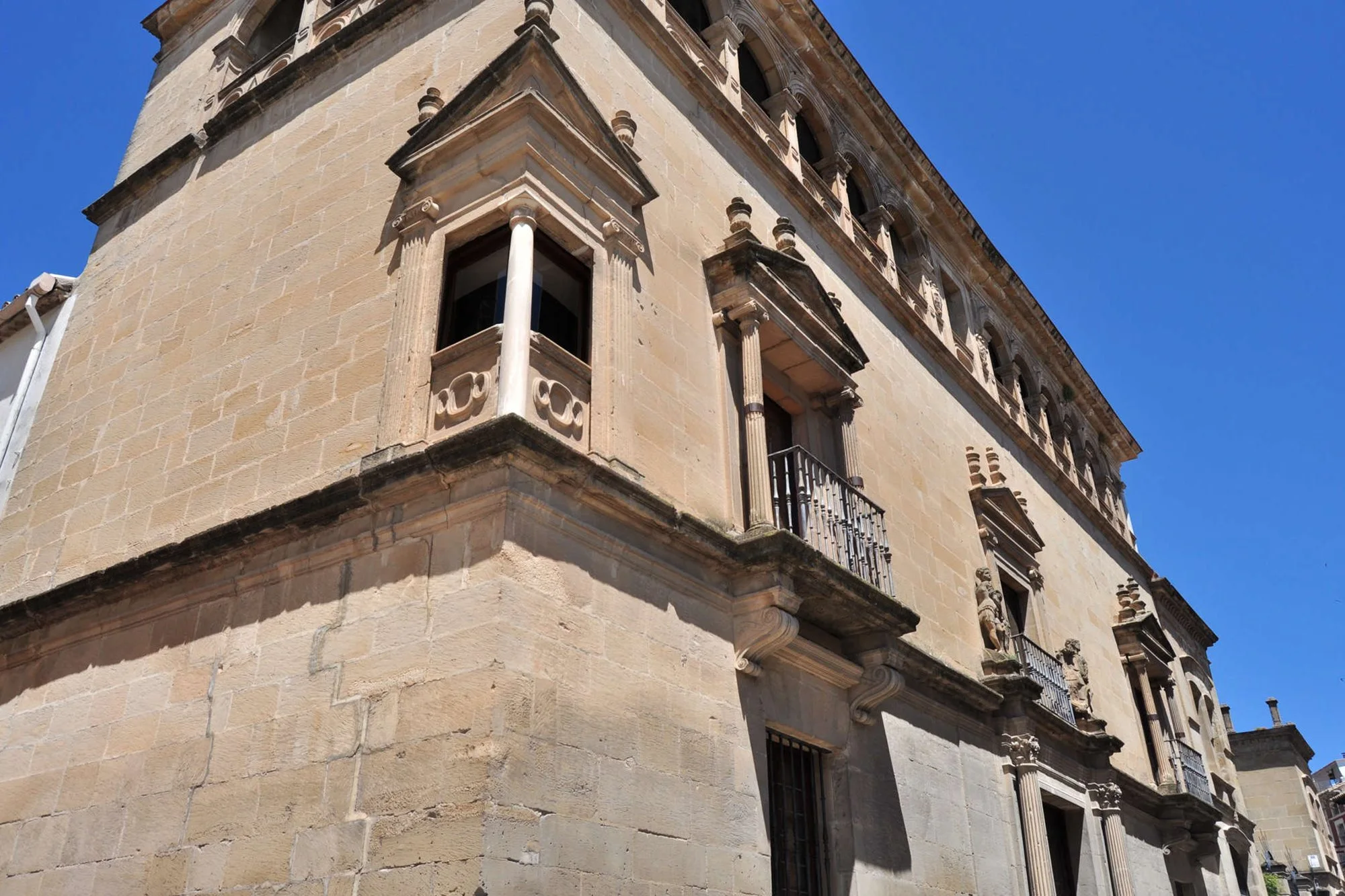
The Palacio Vela de los Cobos is a prime example of a Renaissance palace in the heart of Úbeda's historic centre, a UNESCO World Heritage city.
 

It was built in the mid-16th century by the stonemason Jorge Leal following the designs of Andrés de Vandelvira, architect for Francisco de los Cobos (secretary to Charles V). It is constructed with stone ashlar.


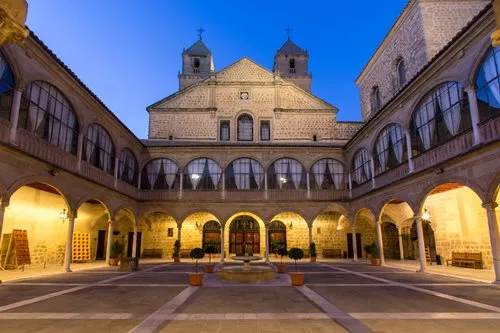
The building is structured into three floors arranged around a central courtyard with columns and arches. The grandeur and elegance of the façade, like in the majority of palaces from the period, increase as you go up each level.
 

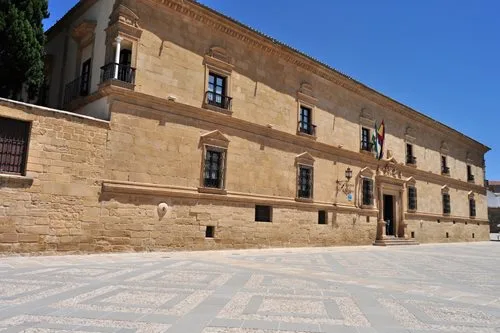
In the centre of the ground floor, the main lintelled doorway stands out, framed with Corinthian columns. The windows on either side of this floor are also lintelled.
 

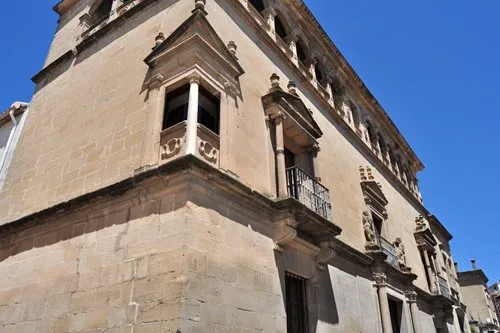
The second floor has four balconies: the central one, aligned with the main door, is framed with pilasters, upon which sculptures supporting heraldic shields rise. The side balconies are flanked by detached columns. On the ends of this floor, angled balconies open up, supported by a marble mullion. Both the pilasters and the balcony columns are of the Ionic order. Above each lintel, there is a triangular pediment with candelabra at its vertices.
 

The upper floor features a gallery of semicircular arches, also with a marble mullion at each of its angles.
 

A large cornice and balustrade top off the whole building.
 

Today, this palace houses an interesting collection of artworks and a library. Its interior also offers tourist apartments.

Built: 16th century.

Author: Andrés de Vandelvira, Jorge Leal

Style: Renaissance

Category: Civil

Type: Mansion-house

Plan your visit

Address and telephone

  • C. Juan Montilla, 6, 23400 Úbeda (Jaén)
  • (+34) 953 75 79 16

Opening times

  • Tuesday to Saturday, from 13:00 to 19:00.
  • Sunday, at 13:00 (closed in the afternoon, except for pre-booked groups).


If you see any mistakes or want to add anything to this information, please contact us.
Location

Attractions in Úbeda

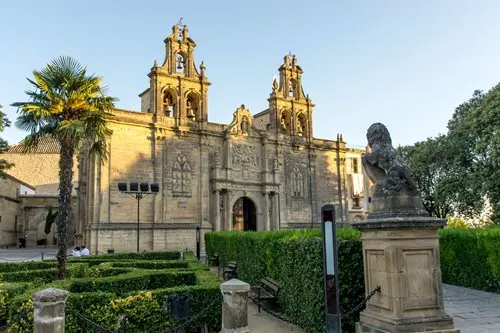
The Basilica and Royal Collegiate Church of Santa María de los Alcázares is the main church of this city and the third in the diocese of Jaén.
The Hospital de Santiago is considered a pinnacle building of the architect Andrés de Vandelvira.
Also known as the Palace of the Marquis of Donadío, it is one of the most important Renaissance palaces in Úbeda. Since 1929, it has been a Parador Nacional de Turismo.
The Sacred Chapel of the Saviour is located in the emblematic Plaza Vázquez de Molina in Úbeda (Jaén). It is one of the most symbolic monuments of the city.

Book your hotel

Booking.com