Cookie settings
We use our own and third-party cookies in order to offer our services, display videos, obtain statistics and offer personalized advertising.
For more information, please read our cookies policy.
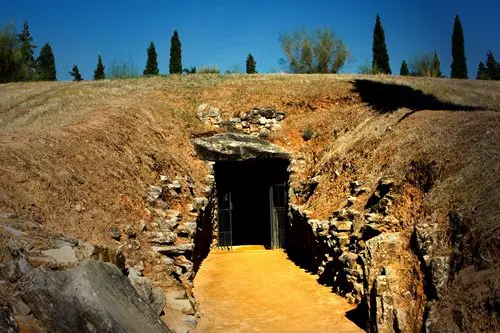
The Archaeological Ensemble of the Antequera Dolmens is the first megalithic site in continental Europe.
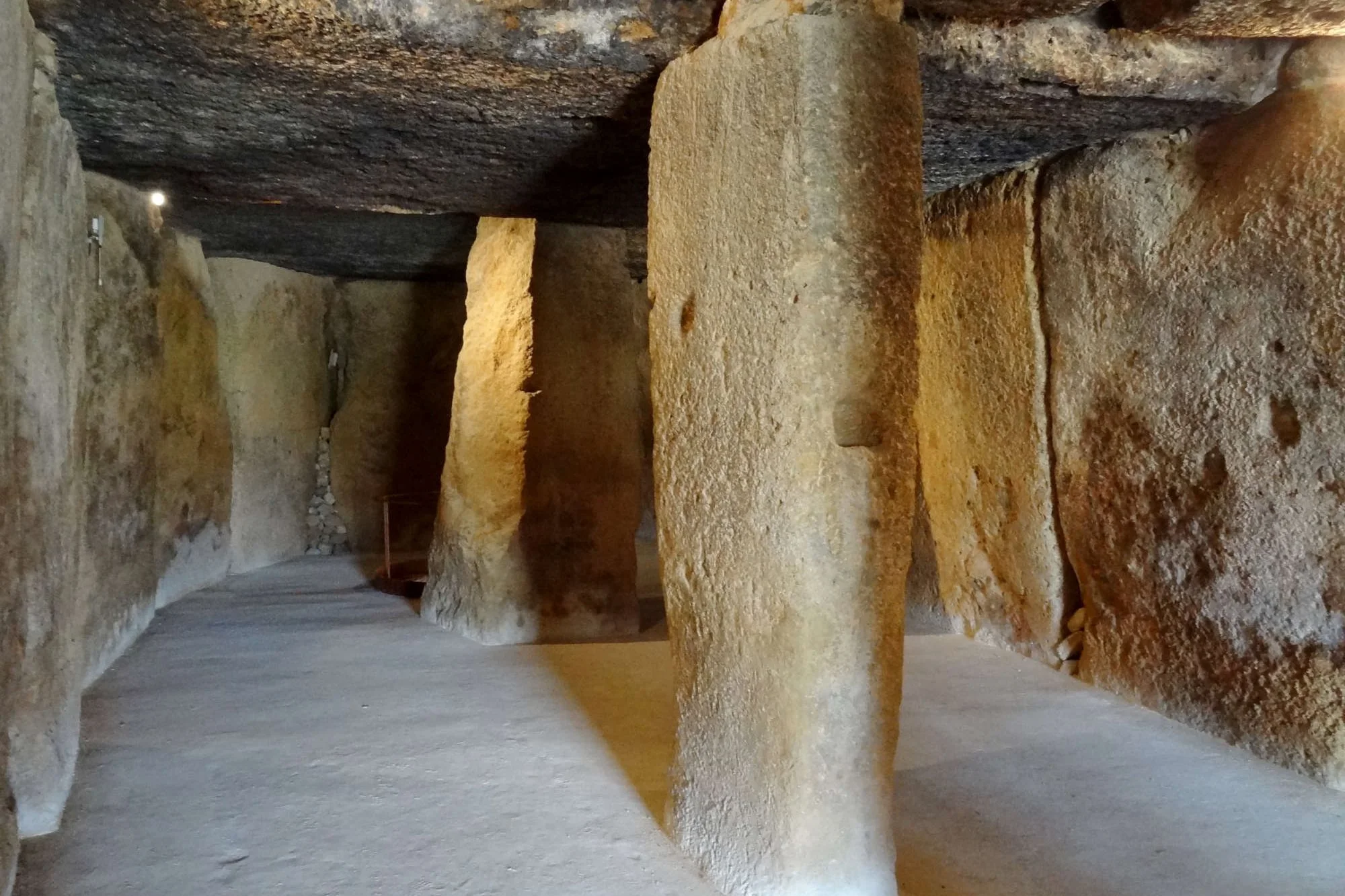
It is a megalithic necropolis formed by the dolmens of Menga, Viera, and the tholos of El Romeral. Moreover, the archaeological ensemble is completed with the Cerro del Marimacho or Cerro de Antequera sites, and the Carnicería de los Moros or the Roman Villa of Antequera.
This ensemble was a pioneer in opening to the public in Spain at the end of the 19th century, alongside the Archaeological Ensemble of Carmona. Its uniqueness lies in that the three tombs, the dolmen of Menga, Viera, and the tholos of El Romeral, preserve the original mound. Another remarkable feature is that each one individually presents technical and formal differences.
It was declared a World Heritage Site by UNESCO in 2016 under the figure of the Antequera Dolmens Site, alongside the El Torcal de Antequera Natural Park and the Peña de los Enamorados. Furthermore, it is the first megalithic site in all of continental Europe and the archaeological ensemble in its declaration (1886).
Built: 6,000 BC - 4,000 BC; 3rd millennium BC; 2,250 BC - 1,900 BC
Style: Bronze Age, Chalcolithic, Neolithic
Category: Civil
Type: Archaeological Site
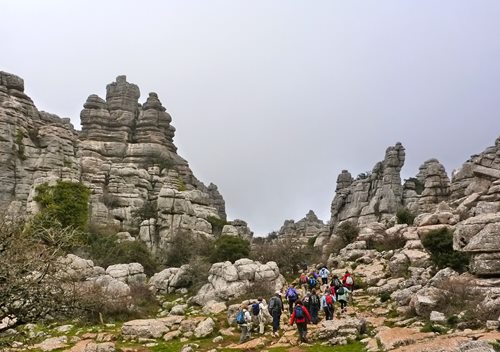
If you are in Malaga, and you want to get out of the city to see other places, Antequera is an essential in your visit schedule.
With this Day Trip to Antequera and El Torcal, you will get to know first-hand the Nature and Heritage of this city so relevant to the Andalusian geography.
Due to its location and its history, it has unique monuments, such as the Archaeological Complex of the Dolmens, declared a World Heritage Site by UNESCO.
In addition, the price includes the official guide, transport from Malaga and tickets.

Address and telephone
Opening times
Prices
Services
Guided Tours.If you see any mistakes or want to add anything to this information, please contact us.
If you are in Malaga, and you want to get out of the city to see other places, Antequera is an essential in your visit schedule.
With this Day Trip to Antequera and El Torcal, you will get to know first-hand the Nature and Heritage of this city so relevant to the Andalusian geography.
Due to its location and its history, it has unique monuments, such as the Archaeological Complex of the Dolmens, declared a World Heritage Site by UNESCO.
In addition, the price includes the official guide, transport from Malaga and tickets.
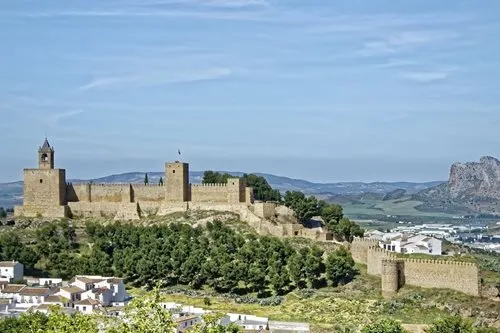
The Monumental Complex of the Alcazaba of Antequera was declared a Site of Cultural Interest in 1985.
With Roman origins, the current structure takes us back to the Andalusian period. The construction has undergone significant transformations due to the presence of different cultures. It was an impregnable site that notably contained the Christian advance until the 14th century.
Its Tower of Homage stands out, crowned by the so-called Papabellotas Clock. It is so named because the city had to sell an oak grove to cover the different expenses.
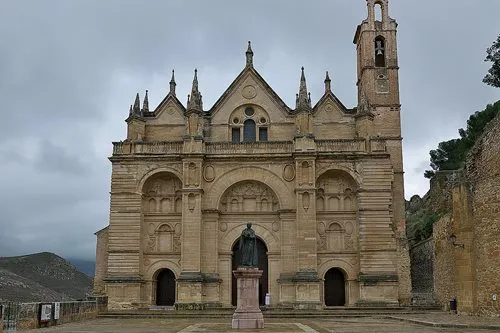
The Real Collegiate Church of Santa María la Mayor is a Renaissance collegiate church located in Antequera. Founded by Diego Ramírez de Villaescusa, bishop of the diocese of Málaga, it was erected on what was a church of the same name.
It was built by the architect Pedro del Campo between 1514 and 1550. At the time, it was one of the first Renaissance temples in an era when Gothic still predominated on the peninsula. Pedro López, master builder of the Cathedral of Málaga, and Diego de Vergara also participated in its construction.
Overall, the Collegiate Church has a basilica floor plan and is composed of three naves. Its imposing façade and pinnacles, reminiscent of Venetian Gothic, are noteworthy. In the square where it is located, a statue of Pedro Espinosa, a Golden Age poet from Antequera, stands out.

Book your hotel