Cookie settings
We use our own and third-party cookies in order to offer our services, display videos, obtain statistics and offer personalized advertising.
For more information, please read our cookies policy.
Situated at the confluence of the rivers Eresma and Clamores, at the foot of the Guadarrama mountain range, Segovia is one of the most important cities in Castilla y León.
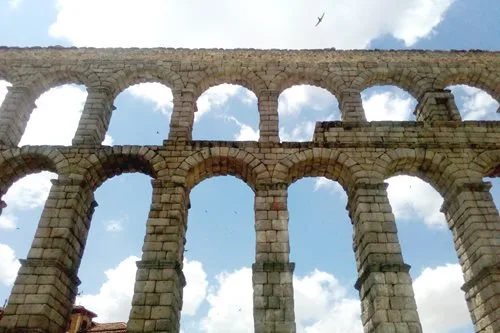
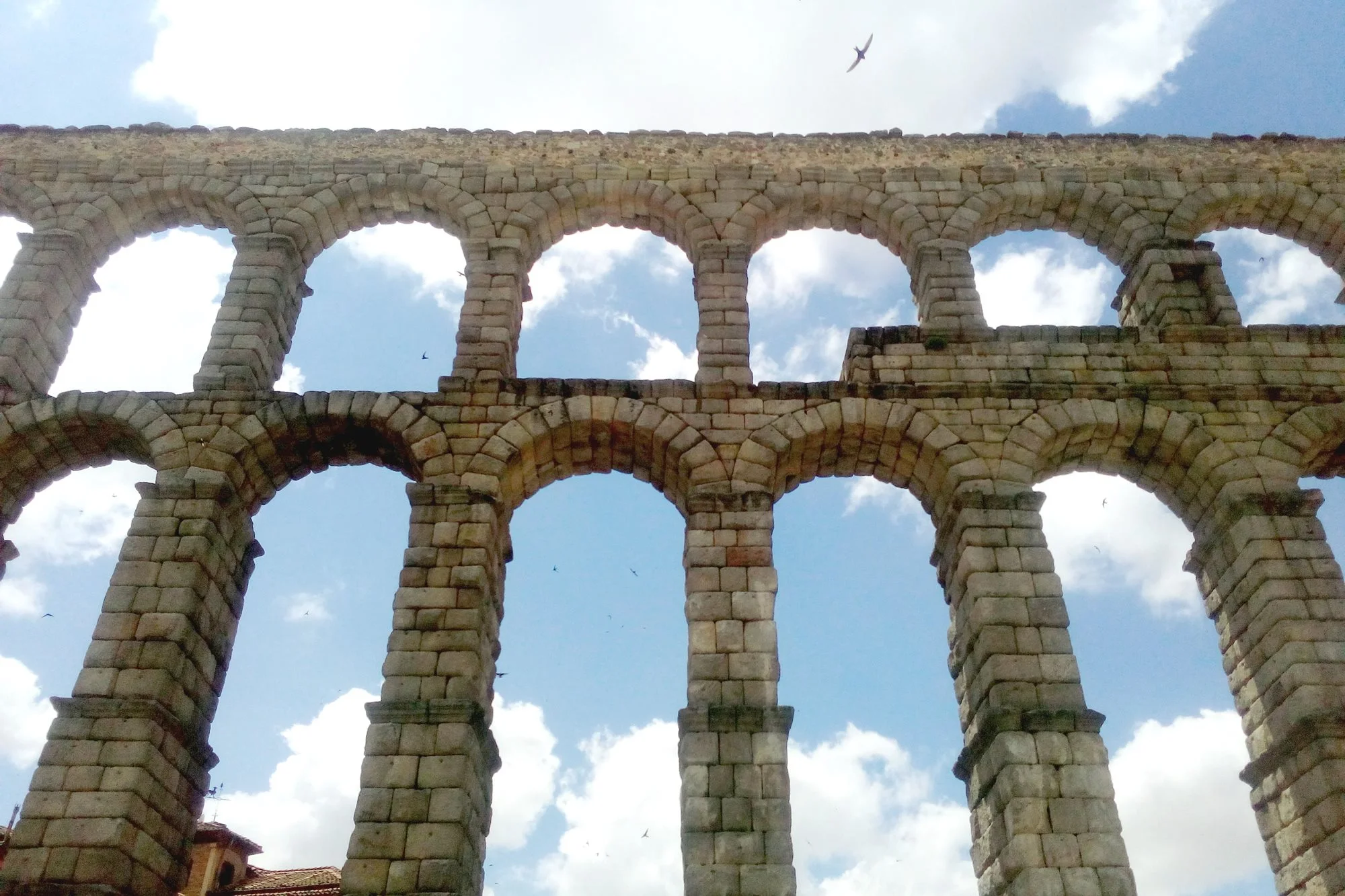
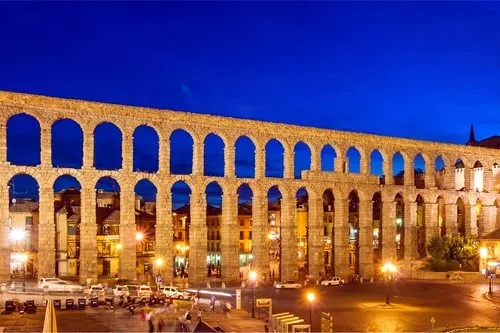
The history of Segovia dates back some 60,000 years. This is known thanks to the Neanderthal remains found at the Abrigo del Molino site in the Eresma valley. This occupation continued throughout Prehistory. It was the Celtiberians who later occupied the area of the current Alcázar until the Roman arrival. From the Roman occupation period, a series of highly valuable heritage elements stand out. The main one being the Aqueduct, the best-preserved Roman engineering work on the peninsula.
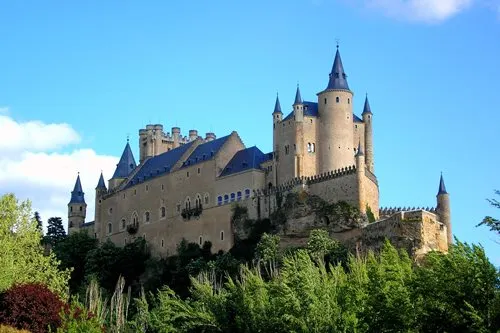
After the Roman and Visigothic period, the Segovia area was abandoned. From the 11th century, Count Raymond of Burgundy, son-in-law of Alfonso VI of León, began a repopulation process. At this time, Romanesque art predominated throughout the city, an example of which was the now-destroyed Church of San Miguel. During this period, Segovia became a vital point for transhumance and herding. An important wool industry emerged, which is still known today. During the last years of the Middle Ages, the city experienced a period of splendour. In the 13th century, the Alcázar was built, which would become the royal residence of Alfonso X.
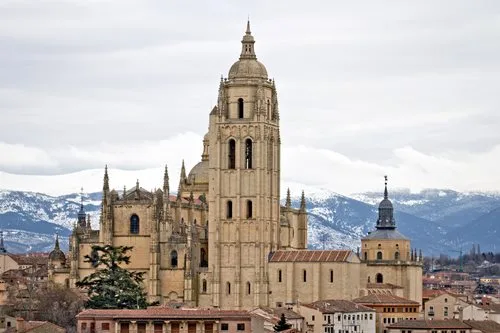
At the beginning of the 16th century, the Cathedral of Segovia was constructed, a Gothic jewel representing the economic splendour the city experienced until that point. From the 17th century, a period of decline began until the Bourbon ascent to the throne in the 18th century, when attempts were made to revive the wool industry. In the 19th century, it suffered looting and various damages from French troops.
The unique historical journey of Segovia has led to the Old Town and the Aqueduct being declared a UNESCO World Heritage Site in 1985. A deserved recognition for a city that combines heritage and natural spaces like the gardens of the Alcázar or various parks and gardens. Segovia also boasts a number of significant museums. For instance, noteworthy are the Gastronomic Museum, the Esteban Vicente Museum of Contemporary Art, the Segovia Museum, or the Machado House-Museum.

Book your hotel
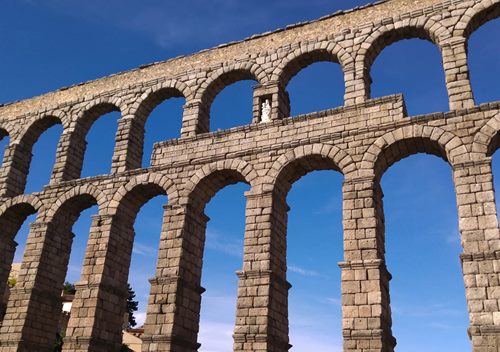
A city as beautiful as Segovia deserves a first encounter with its history. Book this essential free tour and get a close look at the Roman aqueduct, its length, and its number of arches. Stroll through its narrow streets, admiring its traditional houses and landmarks such as the Segovia Cathedral.
All this and much more awaits you in the company of a knowledgeable guide. Plus, you'll receive the best recommendations on where to enjoy authentic Segovian suckling pig.