Cookie settings
We use our own and third-party cookies in order to offer our services, display videos, obtain statistics and offer personalized advertising.
For more information, please read our cookies policy.
Known for its seas of olive trees, Jaén holds a significant historical and artistic heritage formed from the traces and remains of all the civilisations that have inhabited its lands.
In its capital, the walls are the most vivid example of this fact. There are two types of walls corresponding to the Chalcolithic and medieval periods. These defensive walls originate from the Santa Catalina Castle, an ancient caliphal fortress that has undergone various modifications over the ages.
On the other hand, the historic centre maintains its Andalusian-era layout; and the Jaén Cathedral is one of the province's most outstanding jewels. It was designed by Andrés de Vandelvira and is of Gothic and Renaissance style. The capital is also home to the largest Arab baths in Europe and the remnants of the mosque, specifically the minaret and the ablution courtyard, which now form part of the Gothic Church of La Magdalena.
The Torre Bermeja watchtower is located about three kilometres from the city and is the only remnant of an ancient fortress. Although historians disagree on the dating, the 10th century is the most widely accepted origin.
The province boasts two cities declared World Heritage Sites: Úbeda and Baeza. Both towns feature great Renaissance heritage treasures, and furthermore, you can still feel the essence of the 16th century in their streets.
There are many other places of interest in this province. In Sabiote, you can visit the palatial castle of Francisco de los Cobos and the Church of San Pedro, both designed by Andrés de Vandelvira. The castle dates back to the 13th century, when it was a Muslim military fortress. Subsequently, it underwent a series of modifications turning it into the castle we know today. Meanwhile, the Church of San Pedro is another of Jaén's Renaissance jewels.
In Alcalá la Real, the Castle of La Mota stands out, a Nasrid fortress built between the 13th and 14th centuries. In Baños de la Encina, we can visit the Burgalimar Castle, from the Umayyad period.
In the natural surroundings of the Sierras de Segura, Cazorla and Las Villas, we can find Levantine-style cave paintings and undertake magnificent hiking or horse-riding routes. Additionally, Jaén harbours an important Iberian heritage, featuring highlights such as the Toya Iberian funerary chamber, the Despeñaperros sanctuary, and the Iberian-Roman archaeological site of Cástulo.
The Jaén Museum houses a large part of the archaeological remains found in the province. There, you can see all kinds of vestiges, from the prehistoric era to the Hispano-Muslim stage of the province. In Baeza, you can visit the Museum Hacienda la Laguna, an interpretation centre of olive oil culture.
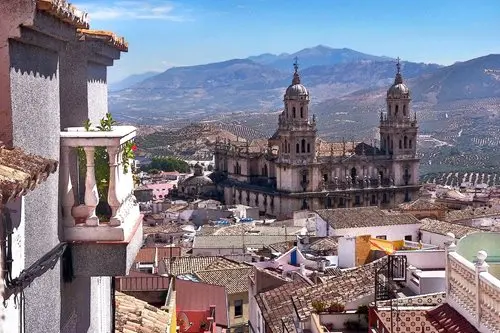
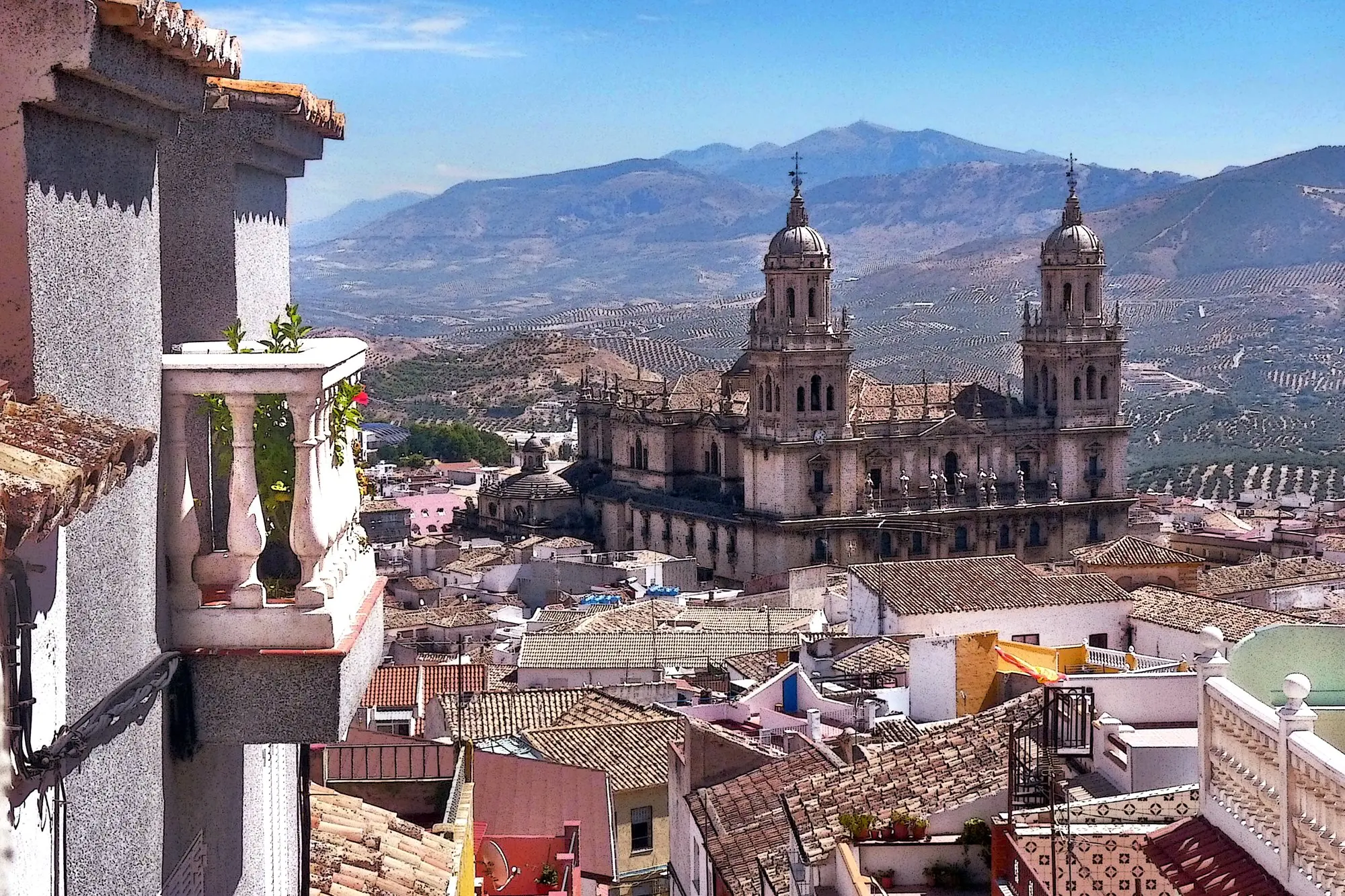
The olive fields surrounding Jaén can be seen from the Castle of Santa Catalina, an Arab fortress situated on the hill of the same name, offering extraordinary views of the city. In its historic centre with charming streets, notable buildings include the Holy Cathedral Church of the Assumption of the Virgin or the Villadompardo Palace, which houses the Museum of Arts and Popular Customs of Jaén, the best-preserved Arab baths in Europe, and the International Naive Art Museum.
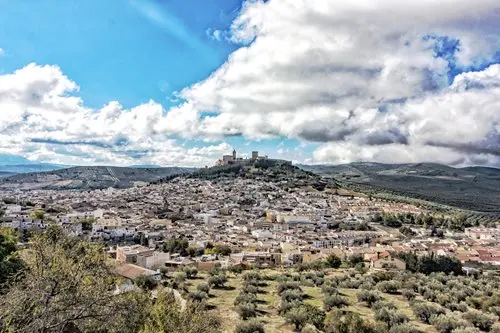
Situated in the southwestern tip of Jaén province, Alcalá la Real stands out as one of the municipalities with the most history in Spain. The highlight is the La Mota fortress, a medieval construction of great heritage value.
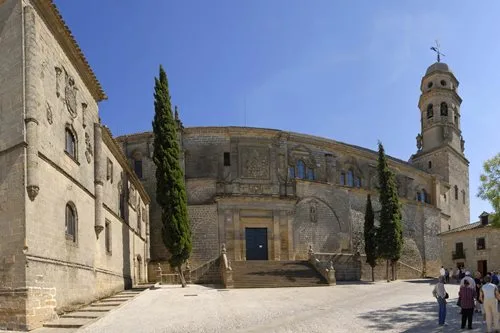
Baeza holds the distinction of being a World Heritage city due to its impressive Renaissance legacy, represented by monuments such as the Cathedral of the Nativity of Our Lady. The University of Baeza, where the poet Antonio Machado taught, is located in a 16th-century building. Nearby is the Jabalquinto Palace. The Plaza del Pópulo houses 16th-century buildings like the Casa del Pópulo. The Puerta de Jaén and the Villalar Arch are part of Baeza's ancient wall.

Book your hotel
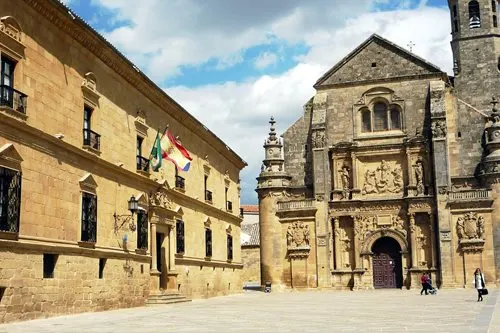
Inhabited since prehistoric times, Úbeda stands out, along with its sister city Baeza, for its great Renaissance heritage treasure concentrated in the Plaza Vázquez de Molina: the Sacred Chapel of the Saviour, the Basilica of Santa María de los Alcázares, the Palace of the Chains and the Palace of the Dean Ortega; for which it was declared a World Heritage City in 2003. In Úbeda, one can enjoy excellent cuisine based on the local products of the La Loma region, of which it is the capital.
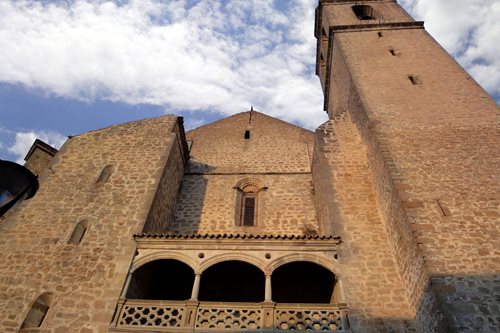
The municipality of Villacarrillo is located in the regions of La Loma and Las Cuatro Villas, in the northeastern part of Jaén. Due to its location in a "sea of olive trees", it is now the main producer of Olive Oil in the world. A key place to enjoy Oleotourism.
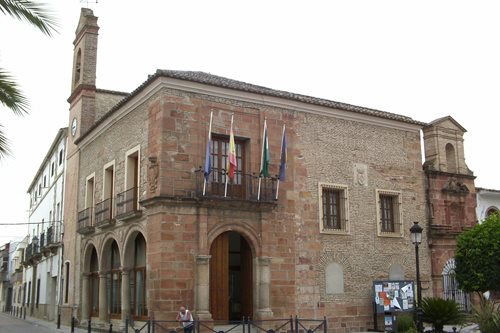
Villanueva de la Reina is a charming town in Jaén located in the Sierras de Andújar Natural Park, crossed by the Guadalquivir River. To the north of its municipal area, it meets Sierra Morena, offering a unique landscape of riverside vegetation, hills, and olive groves. A perfect destination for a rural getaway.
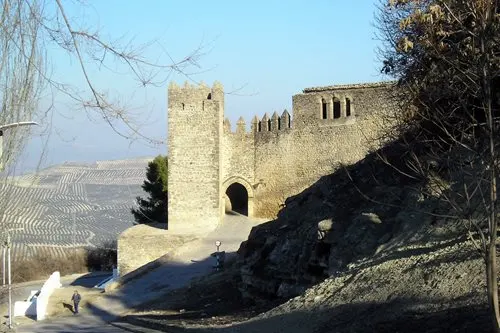
Located in the region of La Loma, Sabiote is a municipality in Jaén notable for its art, forming the "Renaissance triangle" alongside Úbeda and Baeza.
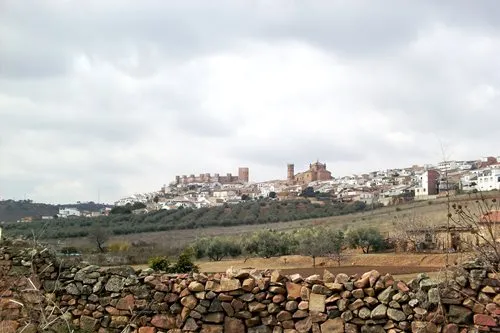
Baños de la Encina is a municipality in Jaén, situated in the Sierra Morena region. It boasts a series of heritage buildings of great significance as well as a truly remarkable natural environment. It is a settlement whose occupation dates back to the Bronze Age, having been inhabited by Iberians, Romans, and Muslims.
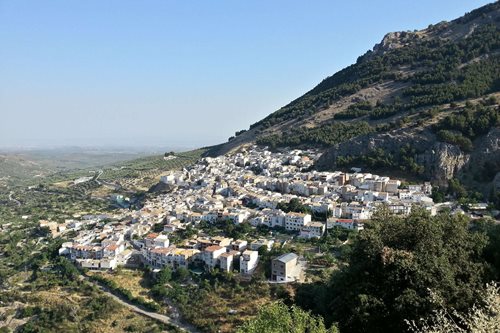
Torres is one of the charming villages of the Sierra de Mágina where you can enjoy incredible landscapes, Oleotourism experiences thanks to its remarkable olive groves, and see its Renaissance heritage such as the Church of Santo Domingo de Guzmán or the Palace of Los Cobos.
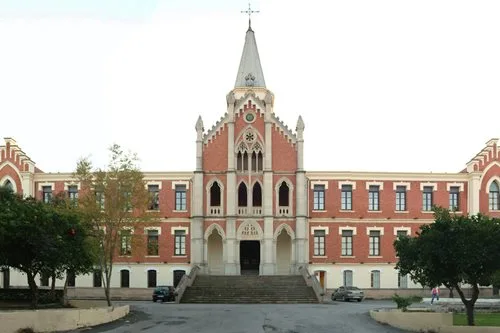
The city of Linares boasts a range of heritage elements, from Roman sites like Cástulo to large mines from contemporary times. Its national tourist significance is currently being highly promoted.
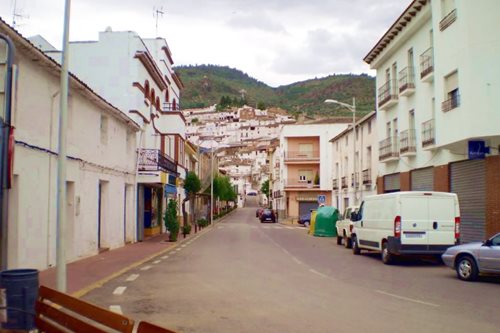
La Puerta de Segura is the "gateway" to the Sierra de Segura, nestled in the heart of the Natural Park of the Sierras de Cazorla, Segura, and Las Villas. It offers a charming landscape of hills and olive groves. Thanks to its oleiculture tradition, visitors can also enjoy Oleotourism activities.
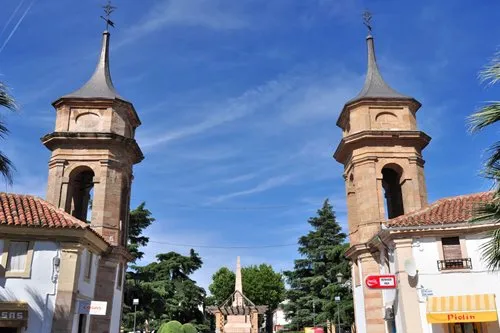
La Carolina is undoubtedly one of the most unique municipalities in the province of Jaén. Located in Sierra Morena, it is considered the natural gateway to Andalusia, next to the Despeñaperros Natural Park. The municipality is composed of five population centres: La Carolina as the main one, Navas de Tolosa, La Fernandina, La Isabela, and El Guindo.
6 reviews
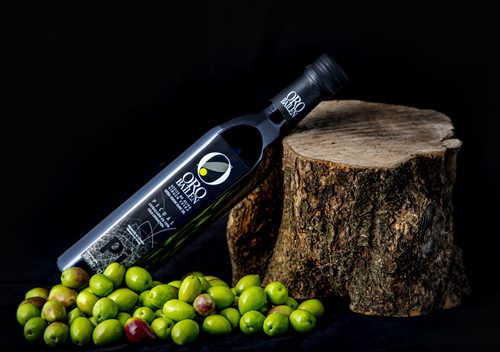
Immerse yourself in the exquisite world of olive oil at the Oro Bailén oil mill, one of the most renowned olive oils in the world. You will start with a visit to the mill where you will learn about the entire process of producing this liquid gold, from the arrival of the olives to their packaging.
You will understand each step in detail. And to finish, you will taste the varieties of the delicious Oro Bailén oil, learning to savor its flavors and aromas.
Don't miss out on enjoying such a privileged oleotourism experience.
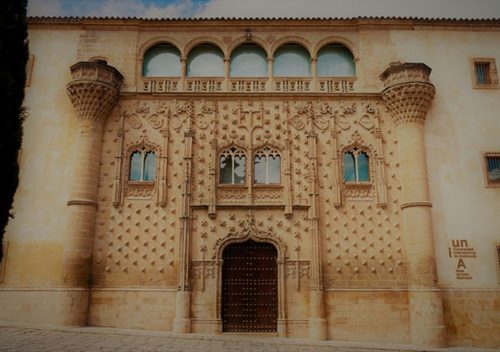
Baeza is the city of which Antonio Machado wrote ‘Campo de Baeza, I'll dream of you when I don't see you’. With this guided tour you will understand why the illustrious poet expressed his longing for Baeza, a city declared a World Heritage Site together with Úbeda, thanks to its great monumental and historical heritage of its splendid Andalusian Renaissance.
Cobbled streets, a Cathedral of Romanesque origin and later transformed into Renaissance, palaces with beautiful ‘altarpiece-doors’ in honour of the nobles who lived there. It will seem as if you are walking through a Castilian city but in the middle of the olive groves of Jaén. You will also be able to taste the local olive grove's ‘green gold’. A perfect visit to get to know the culture and tradition of Baeza to the full.
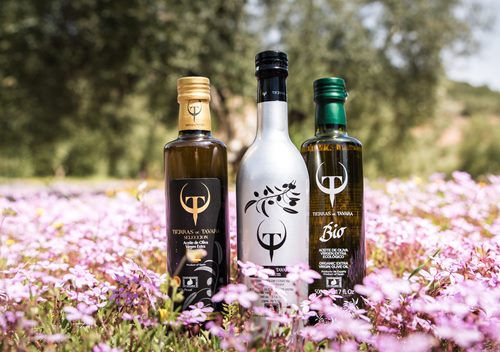
One of the most famous mills in Jaén is Oleofer S.L., where the exquisite "Tierras de Tavara" EVOO is produced. On this visit, you will learn firsthand about the culture of this liquid gold. You will discover the production process from the moment the olives arrive at the mill until the oil is bottled and ready for sale.
You will complete the experience with a tasting, delighting in different types of Extra Virgin Olive Oils and learning to distinguish between them.
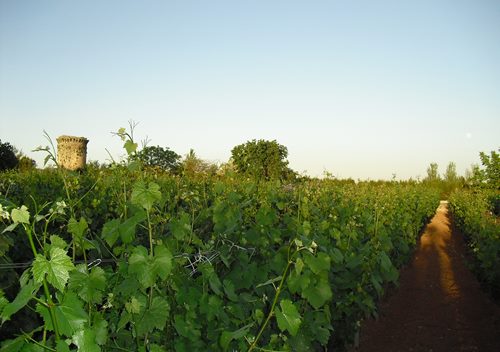
If you like to discover locally produced wines, Alcalá la Real is the perfect place for you. You'll visit Marcelino Serrano's vineyards and winery, where you'll taste three of his own wines and sample typical local aperitifs. You'll discover the complex world behind wine production, its curiosities, anecdotes, etc. All from the hand of experts, such as the winegrower and oenologist Marcelino Serrano, and Blanca María Serrano, oenologist, Technical Engineer in Agro-food Industries and Oenology Graduate from the University of Cordoba.