Cookie settings
We use our own and third-party cookies in order to offer our services, display videos, obtain statistics and offer personalized advertising.
For more information, please read our cookies policy.
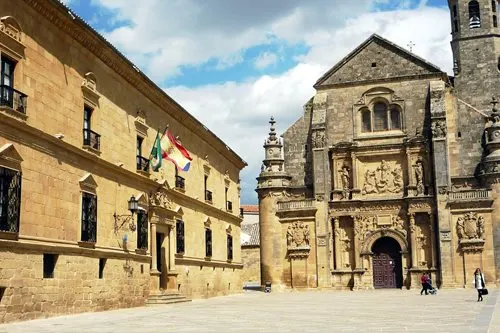
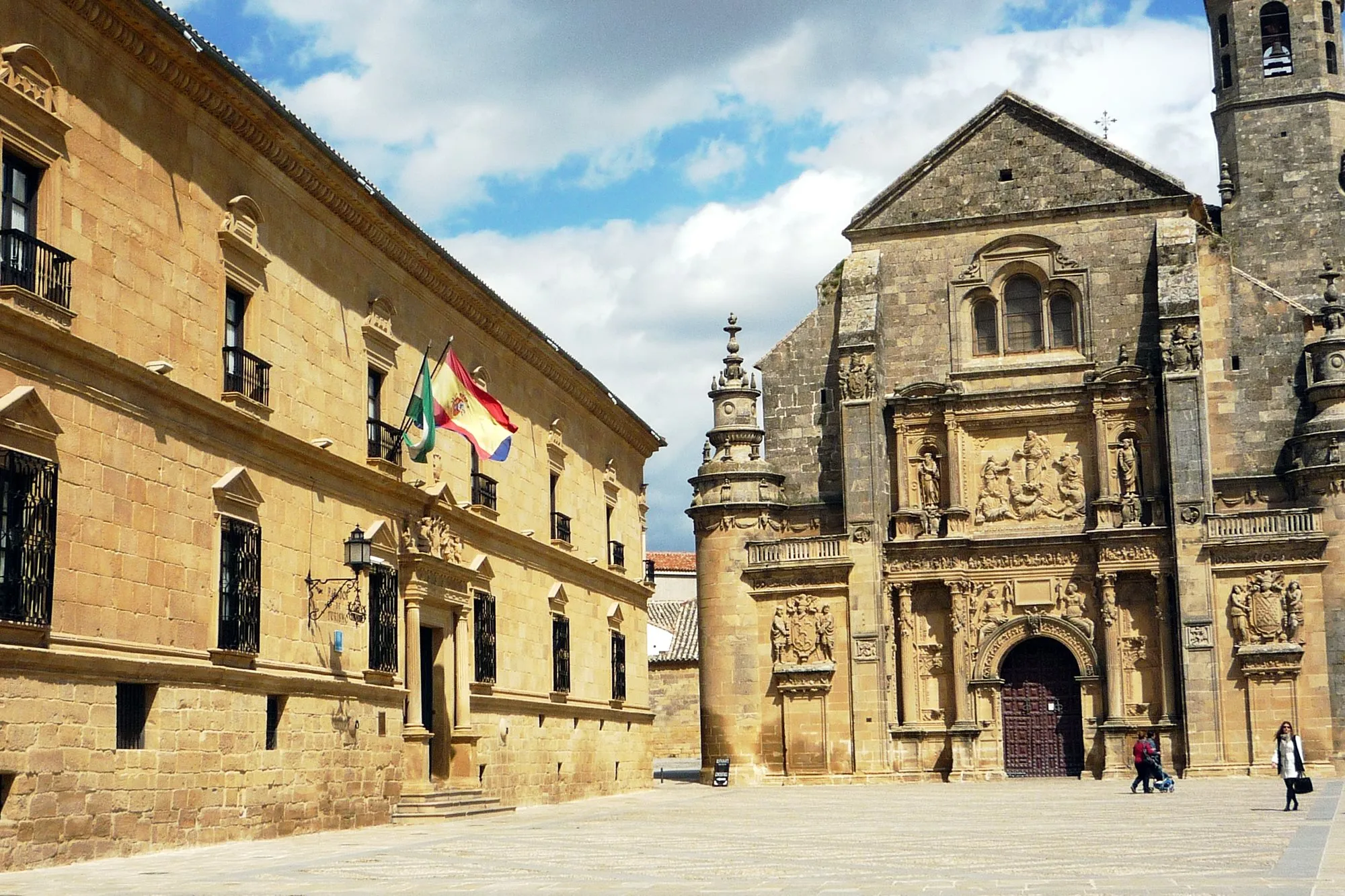
Although inhabited since the Bronze Age, Úbeda is, above all, the benchmark of Renaissance architecture and urbanism in Spain. In this World Heritage city, the buildings located in the famous Plaza Vázquez de Molina stand out: the Sacred Chapel of the Saviour, the Basilica of Santa María de los Alcázares, the Palace of the Chains and the Palace of the Dean Ortega. A beautiful Venetian-style fountain presides over the plaza Vázquez de Molina.
The Sacred Chapel of the Saviour was devised by Francisco de los Cobos, secretary to Charles V and a very important figure in the history of the city of Úbeda, who wanted this chapel to be conceived as a pantheon annexed to his palace. It was initially designed by Diego de Siloé, but its design was continued by Andrés de Vandelvira from the year 1540.
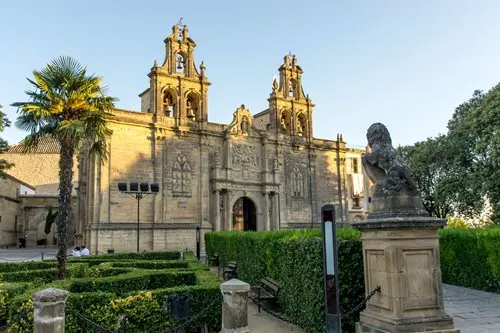
The Basilica of Santa María de los Alcázares was built on the site of the former major mosque and is a clear example of the layering of styles. Having a chapterhouse, it holds the status of a collegiate church.
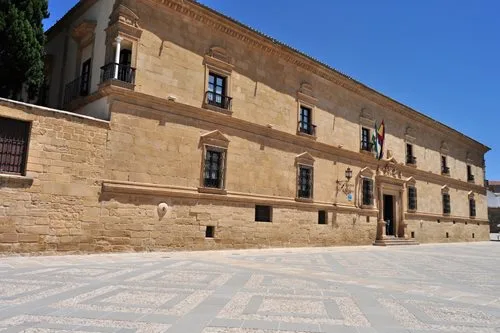
The Vázquez de Molina Palace is known as «of the Chains» because of the chains located at the front part of the palace. It was designed by Vandelvira in 1562 in the manner of an Italian Renaissance palace. Currently, it houses the Town Hall of Úbeda.
Another important palace in the city of Úbeda is the Palace of the Dean Ortega, also known as the Palace of the Marquis of Donadío. It dates from the 16th century and is the work of Vandelvira.
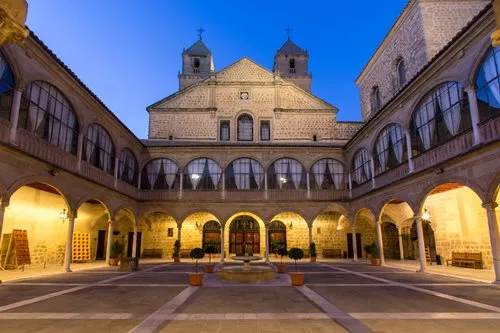
The Santiago Hospital, a work by Pedro de Vandelvira, son of the same architect of the Jaén Cathedral and other great architectural works in the province, is another of Úbeda's most famous constructions. This building is just a few minutes' walk from Plaza Vázquez de Molina. It was designed as a hospital for the poor sick and also to serve as a palace and church. Nowadays it has a cultural use and hosts various concerts, exhibitions, and congresses.
Additionally, it is possible to see examples of manor houses and Jewish houses in Úbeda. A demonstration of Hebrew culture in Úbeda is the so-called Water Synagogue, discovered in 2010, and although its Sephardic origin is known, we do not know exactly what its function was.
Meanwhile, the wall of Úbeda dates back to the 10th century and surrounds the entire city. It preserves three gates of different architectural styles: Puerta del Losal, of Granada, and Puerta de Santa Lucía.
Book your hotel
Things to do
Currently, we do not have any companies with activities in Úbeda.
Do you have a company that offers guided tours, events, shows, active tourism and outdoor activities or other leisure and tourism activities in Úbeda? Contact us and we'll explain how to include these services for free.