Cookie settings
We use our own and third-party cookies in order to offer our services, display videos, obtain statistics and offer personalized advertising.
For more information, please read our cookies policy.
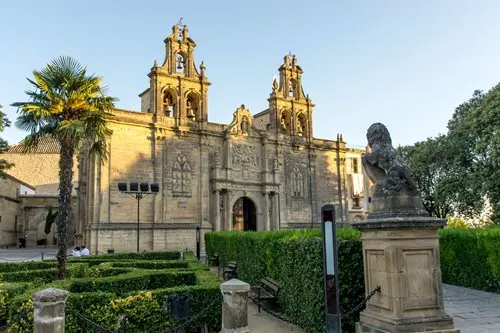
The Sacred Chapel of the Saviour is located in the emblematic Plaza Vázquez de Molina in Úbeda (Jaén). It is one of the most symbolic monuments of the city.
At the same time, it is the most ambitious temple of private religious Renaissance architecture in Spain.
It was built in 1536 under the patronage of Francisco de los Cobos, personal secretary to Emperor Charles V. His idea was to create a pantheon attached to his private palace, located in the same square. It was declared a historic-artistic monument in 1931.
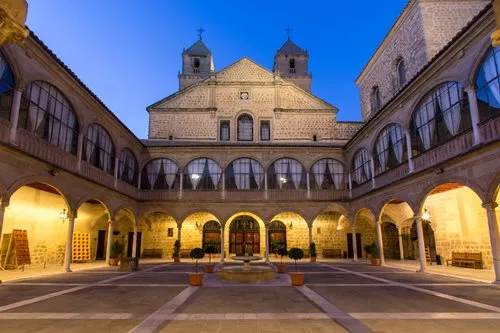
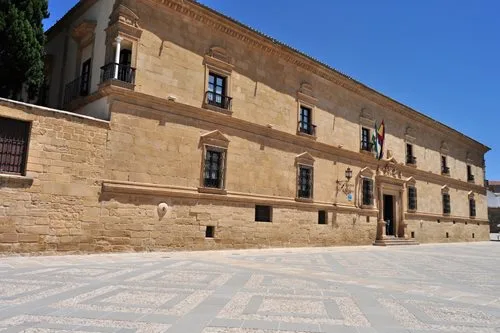
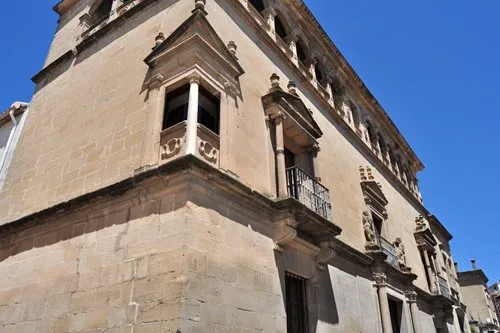
It forms part of a broad artistic programme of the 16th century, along with the aforementioned Francisco de los Cobos Palace, a Hospital and a University. This programme aimed to spread the fame, fortune, and glory achieved by Francisco. To this end, he sought out first-rate artists.
Initially, the project of the Sacred Chapel of the Saviour was commissioned to Diego de Siloé (1536), but it was carried out by Andrés de Vandelvira from the year 1540. Its church is a single nave, with a large centralised chancel, where the main altar is located. 1559 was the year of its consecration.
The sculptural decoration was carried out by the French sculptor Esteba Jamete. Other prominent artists of the time also participated in the project, such as Berruguete (author of the original altarpiece of the main altar), the ironworker Villalpando or the Italian painter Julio de Aquiles.
To the left of its main façade, the great Dean Ortega Palace, first chaplain of the temple, was erected.
Built: 16th century.
Author: D. de Siloé, Andrés de Vandelvira, Esteban Jamete
Style: Renaissance
Category: Religious
Type: Church
Address and telephone
Opening times
Prices
If you see any mistakes or want to add anything to this information, please contact us.