Cookie settings
We use our own and third-party cookies in order to offer our services, display videos, obtain statistics and offer personalized advertising.
For more information, please read our cookies policy.
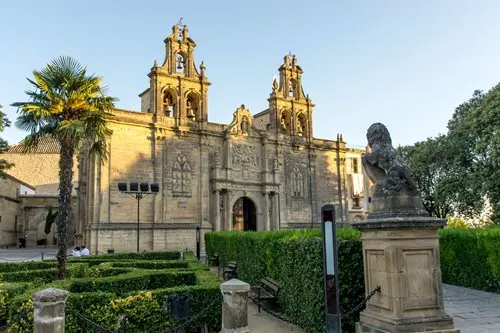
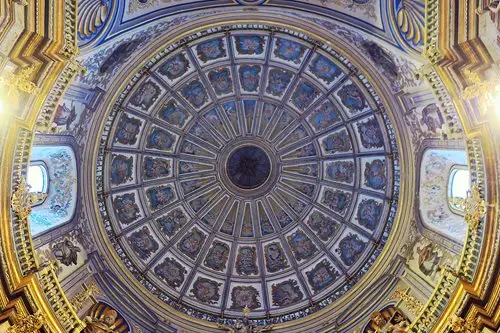
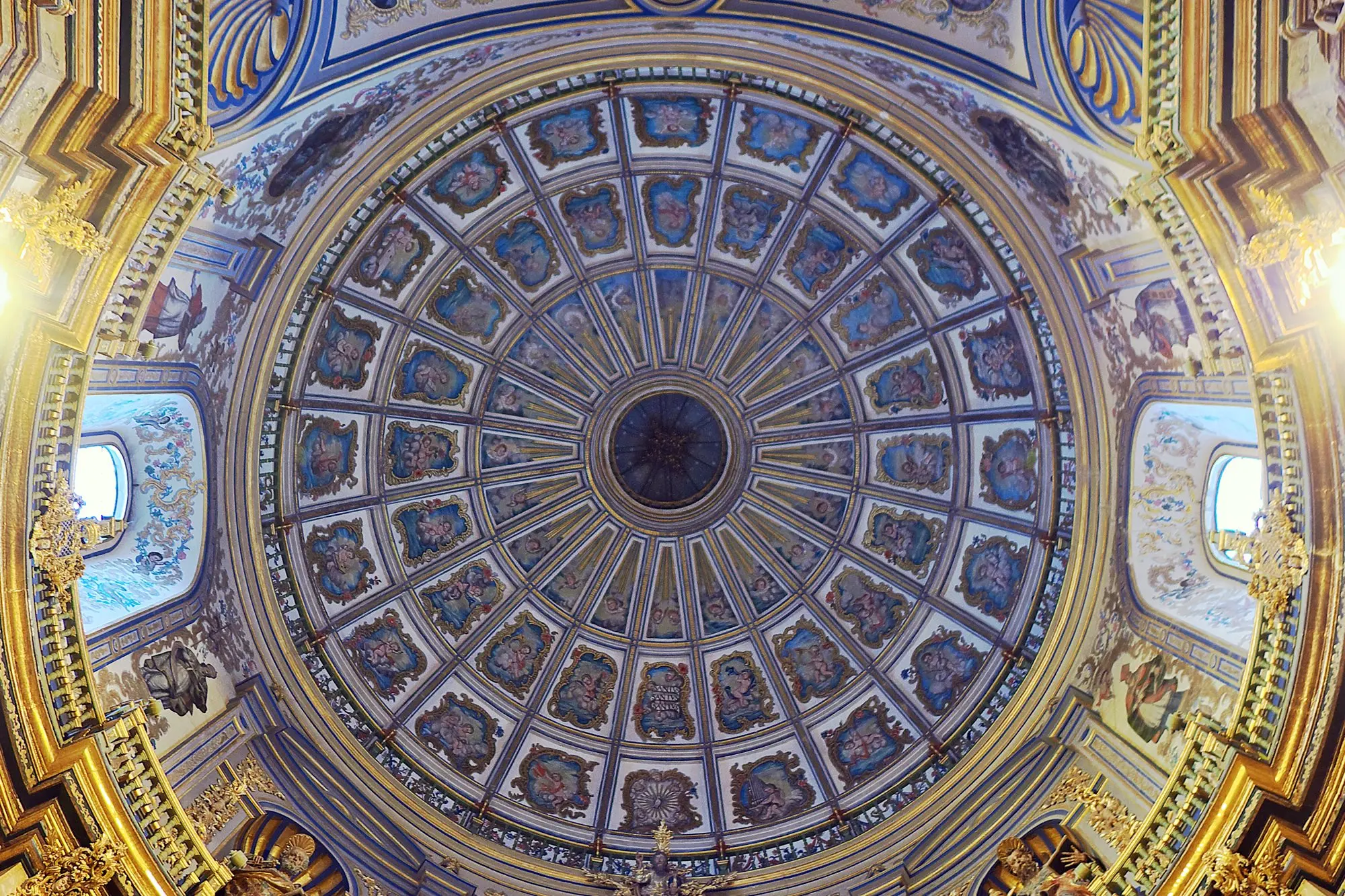
The Sacra Capilla del Salvador is a single-nave church covered by ribbed vaulting, with a centrally-planned chancel also covered by coffered vaulting. The choir is located at the back and the niche chapels are separated by large Corinthian columns. Much of the interior design is attributed to Diego de Siloé, who conceived it as a funerary temple with a large rotunda and an added nave. The rotunda was intended for the nobility, while the nave was for the common people.
The main altar is dominated by a wooden altarpiece by Alonso Berruguete. This altarpiece represents the Transfiguration. It was burned by militiamen during the Spanish Civil War, and only the central Christ figure remains today. It was restored last century by sculptor Juan Luis Vassallo.
This temple housed a collection of valuable works of art and relics. Some were gifted to its founder; such as the Piedad de Úbeda, a work by Sebastiano del Piombo (now in the Prado Museum, having previously been moved to the Casa de Pilatos in Seville), or a gold chalice given to him by Carlos V. Also notable is a Calvary by Pieter Coecke (currently housed temporarily in the Casa Pilatos in Seville), and an ivory crucifix dating from the 16th century.
Of all the pieces, one is particularly noted. It is the marble sculpture of St. John the Baptist attributed by Gómez-Moreno to Michelangelo. This authorship was also supported by later experts. The work was seriously damaged in 1936, with its fragments sent by the Casa de Medinaceli to Florence in 1995 for restoration (a task completed in 2013).
The wrought iron screen separating the nave from the main chapel was crafted in 1557 by Francisco de Villalpando (cast two years earlier). It features two sections and three bodies, with the central one being taller and slender.
The cresting of the temple is decorated with four medallions depicting the Virtues, along with the noble coat of arms of the Cobos family, topped by a cross. The central vault is supported by attached Corinthian columns. Above the entablature lies a continuous gallery, creating small balconies with caryatids at the archway's mouth. The vaults' decoration is more sober, resembling the ribs of the Isabelline style.
To the left of the chancel is the original access to the sacristy, formed by a corner archway. It is one of the most beautiful architectural solutions executed by Vandelvira. It is believed to represent the Gate of Eden. On both sides, the doorway is adorned with caryatids instead of columns. These caryatids hold baskets of flowers on their heads, and above their baskets rests a double entablature with grotesques in the centre. Above this entablature rests the image of the Virgin of Peace, symbolising harmony between power and people. The figures personifying this are an emperor and a kneeling servant beside him. The decoration is completed with two putti.
The sacristy's structure is a longitudinal nave with niche chapels for drawers. It is covered by a barrel vault in its three sections. This sacristy is itself considered one of the most outstanding works of Spanish Renaissance. Its interior features an exquisite sculptural decoration designed by Andrés de Vandelvira and executed by Esteban Jamete.
The theme of this decoration is vices and virtues. An excellent collection of caryatids, sibyls in spandrels, male figures, etc. This design precedes that of Jaén Cathedral. The arches allow for niches housing drawers where liturgical vestments are kept. The entablature is supported by caryatids, resting on human heads.
Address and telephone
Opening times
Prices
If you see any mistakes or want to add anything to this information, please contact us.