We use our own and third-party cookies in order to offer our services, display videos, obtain statistics and offer personalized advertising. You can accept all cookies by clicking "Accept". If you want to refuse all or some of them, click "Cookie settings". For more information, please read our cookies policy.
Cookie settings
×
Cookie settings
We use our own and third-party cookies in order to offer our services, display videos, obtain statistics and offer personalized advertising.
Technical Cookies
These cookies allow the user to navigate the website and use the different options and services offered. InSpain.org uses its own and third-party technical cookies. Our website needs some technical cookies to work properly. These cookies cannot be disabled.
Analytical cookies
These cookies allow the tracking and the analysis of the behavior of website visitors. The gathered information is used for measuring the website activity and to develop statistics to further improve the website. InSpain.org uses third-party analytical cookies.
Behavioural advertising cookies
These cookies collect information about your browsing habits in order to make advertising relevant to you and your interests. InSpain.org uses its own and third-party behavioural advertising cookies.
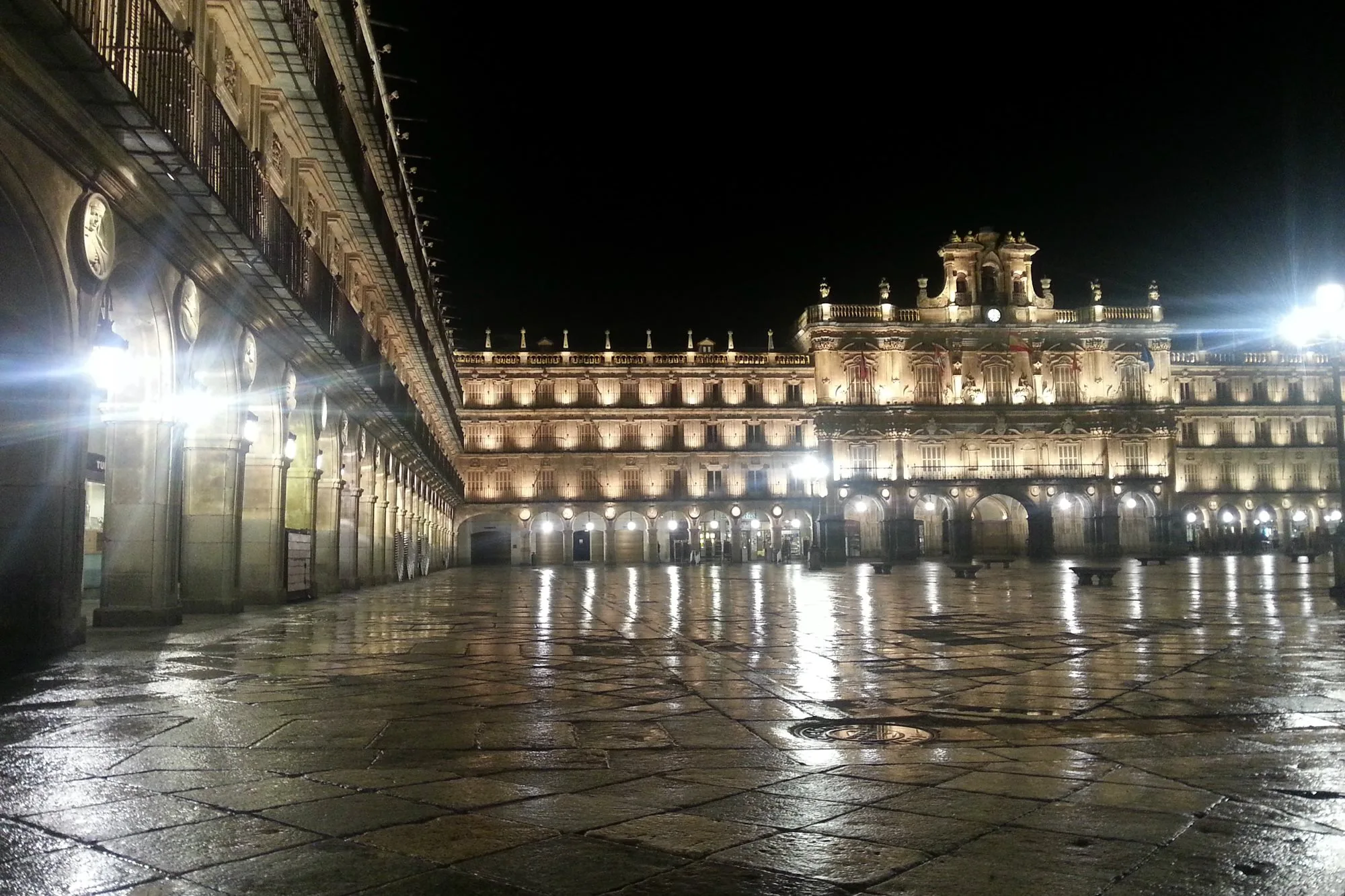
The square has the form of an irregular quadrilateral, with four facades of three floors, all of them of different length. In the centre of the façade, the one oriented to the North, we can find the city council over which is built a belfry with three...
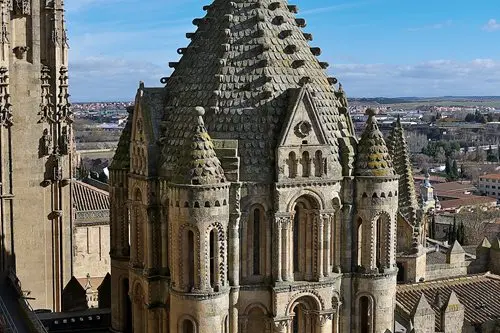
The group of cathedrals of Salamanca comprises the Old Cathedral and the New Cathedral, which share the great bells tower. The Old Cathedral or St María Cathedral is one of the most beautiful in its style. It has a Latin cross plan with three naves that...
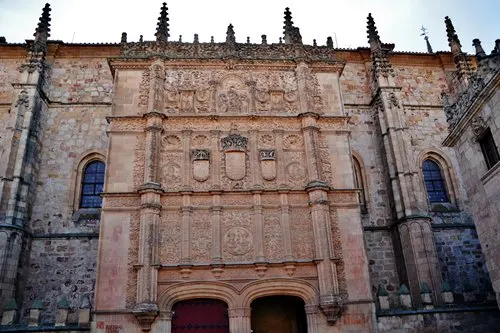
In 1218 the king Alfonso IX de León founded the University as a General School. It is a square building whose façade consists of three superimposed bodies that are separated by their corresponding freizes and crowned by a cresting. They are divided, in...
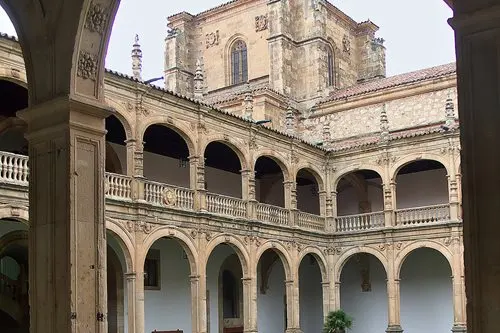
It was built in 1521 by the Archbishop Fonseca. It is also known as “Colegio de los Irlandeses” (Irish College), because it took in students and seminarists from that country. The building was designed by Juan de Álava, but later it suffers an important...
It is popularly known as Dominicos. The church has a Latin cross plan, only one nave and a dome over the transept. The façade is framed by a great triumphal arch and is sculpted like an altarpiece with profusion of statues of Saints under medallions and...
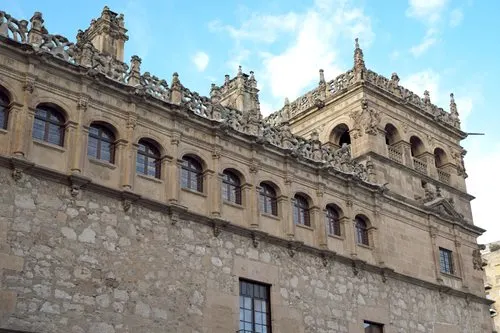
It is a Late Gothic building with Renaissance and Mudéjar elements. It is the residence of the knight of the Order of Santiago, Don Rodrigo García Maldonado, that is why its façade is decorated with shells as well as with many coats of arms such as Maldonado´...
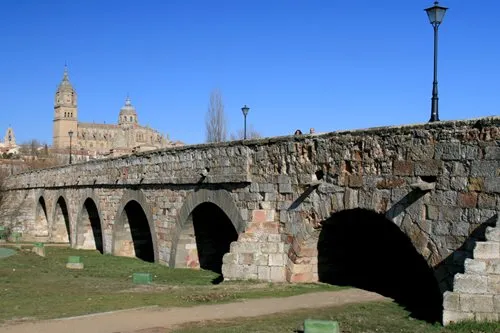
The bridge was built over the River Tormes, in times of Trajano. It consists of twenty six round arches leaned on pillars built with ashlar of country dressed granite, divided by supports and settled over pillars with buttress directed against the current....
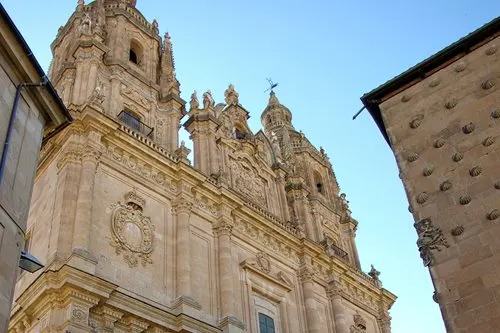
The building houses the Pontifical University. The complex was built under Felipe III´ s orders, at the beginning of the XVII Century. The temple consists of one nave and a transept, and over it, a dome composed by an eight sides tambour. The façade consists...
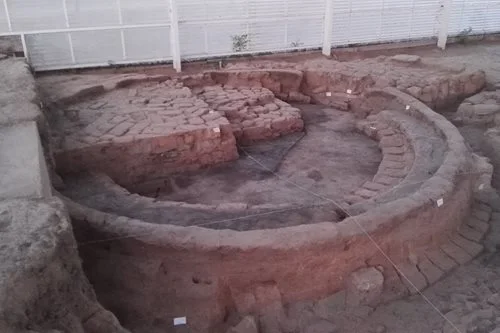
The Cerro de San Vicente site is considered the first place of stable human settlement in present-day Salamanca. Excavations have revealed an Iron Age settlement associated with the indigenous Soto culture.
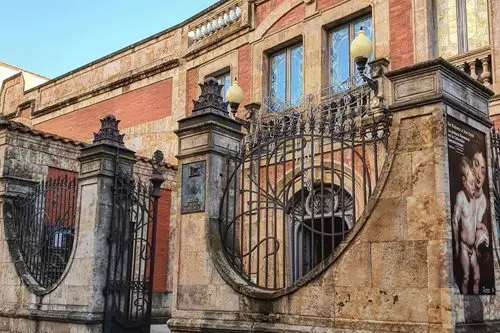
Casa Lis, currently the Art Nouveau and Art Déco Museum, is one of the most iconic and recognised buildings in the city of Salamanca. It was commissioned by Miguel de Lis (a local businessman) from Joaquín de Vargas y Aguirre, an architect from Jerez...
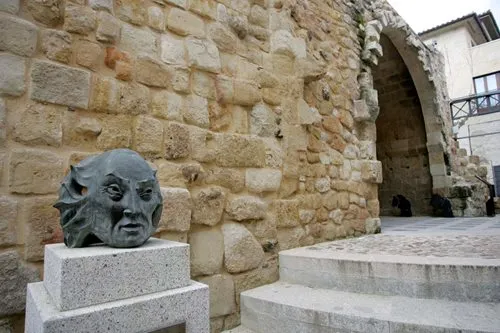
The place known as the Cave of Salamanca is one of the sites with the most stories and mysteries in the city. Originally, it was the crypt of the now-demolished Church of San Cebrián, a Romanesque temple that was destroyed in the 16th century.