Cookie settings
We use our own and third-party cookies in order to offer our services, display videos, obtain statistics and offer personalized advertising.
For more information, please read our cookies policy.
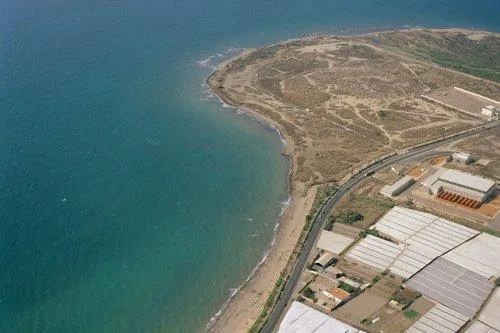
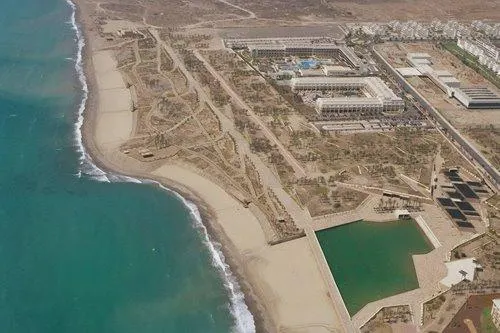
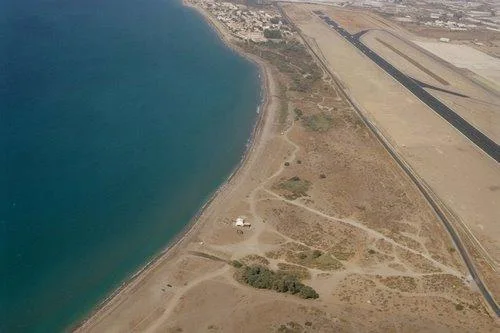
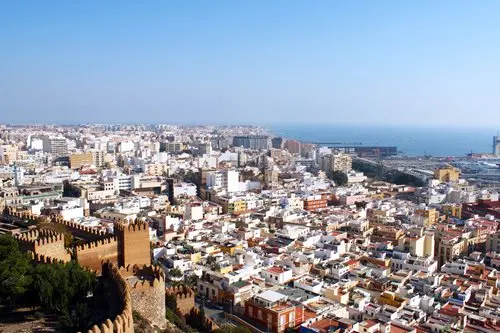
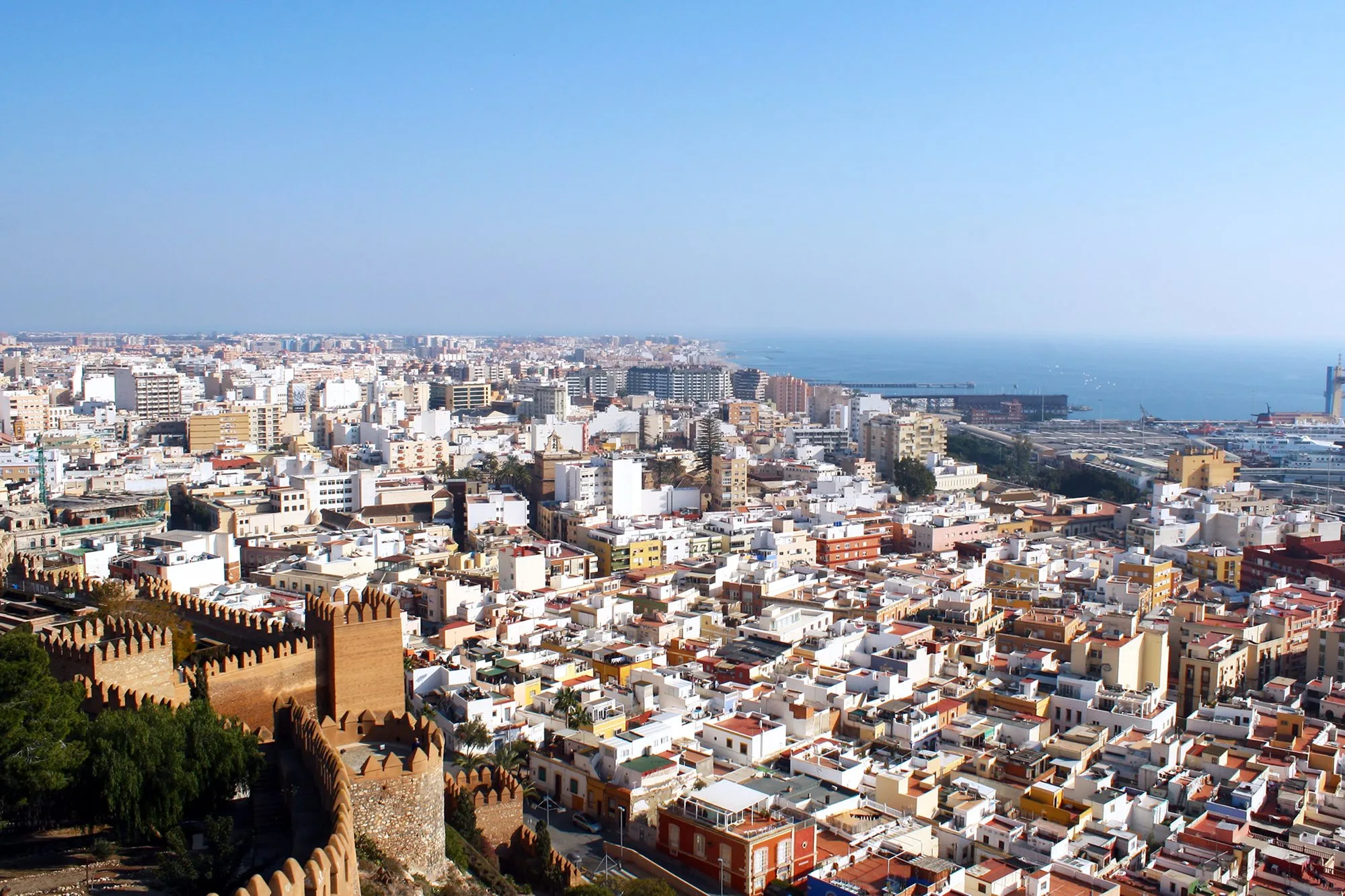
Presided over by its imposing Alcazaba, Almería sits in the bay that shares its name. Capital of the eponymous province, much of its municipal area is within the Cabo de Gata-Níjar Natural Park.
Inhabited since Prehistoric times, it is an area where significant cultures such as Los Millares and El Argar developed. It was also an area of Phoenician, Carthaginian, and Roman occupation. It truly flourished from the Andalusian period onward. Al-Mariya Bayyana, the name given during that period, was a significant port for the Caliphate of Córdoba for centuries. After a period of Christian attacks from the 13th century, the city was conquered by the Catholic Monarchs in 1489. From that moment and until 1833, it belonged to the Kingdom of Granada. From this period onward, the area's mining exploitation transformed the city and provided an important economic boost, eventually replaced by the cultivation of its vast greenhouses.
This rich history has left us a series of valuable monuments. For instance, the Alcazaba, erected by order of Caliph Abd al-Rahman III, crowns the city. Also notable from the Christian period is the Cathedral Church of Our Lady of the Incarnation. This construction dates from the 16th century and is particularly peculiar as it is organised as a "fortress". This is because it was built at a time when Berber pirate attacks were frequent.
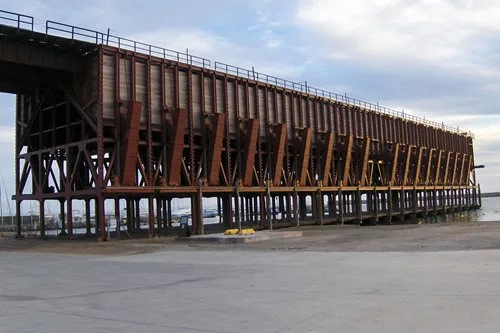
As an example of industrial heritage, the Cable Inglés stands out, a former mineral loading platform that belonged to The Alquife Mines and Railway Company Limited. The structure, a remnant today of the mining exploitation, was used to transport minerals from Alquife.
From the Civil War period, a series of exceptionally well-preserved air-raid shelters have survived to the present. The Civil War Shelters of Almería are a network of underground galleries stretching over 4 kilometres, among which operating rooms or large stores stand out. Undoubtedly, a respectable testament to a recent past.
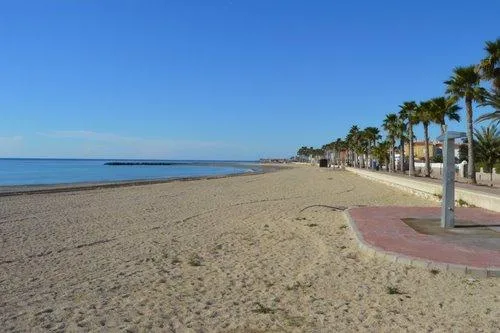
Beyond this heritage, the beaches of Almería are some of the most prominent on the peninsula. This pairs very well with its cuisine and its extensive offer of bars and restaurants where one can enjoy a wide variety of tapas.

Book your hotel
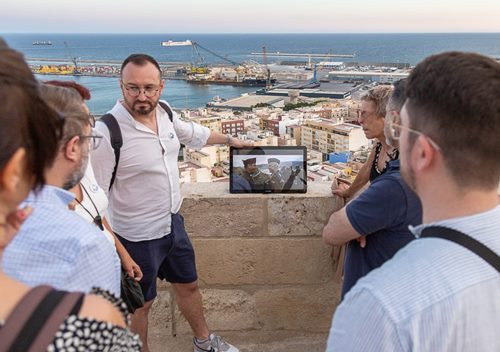
If you visit Almería, you can't leave without getting to know its universal legacy in cinema. On this guided tour, you'll discover the history of this city and its links to the filming of some of the most famous movies. You will visit the places of interest in the city centre, such as the Cathedral, the Alcazaba or the Chanca neighbourhood.
You will discover how scenes set in Morocco, Egypt, Lebanon, Mexico, etc. are represented in Almeria through film. You will live an immersive experience thanks to the photographs and sequences that the guide will show you on a Tablet.
You'll finish with refreshments and a surprise at the end. Don't miss this fantastic tour of Almeria.
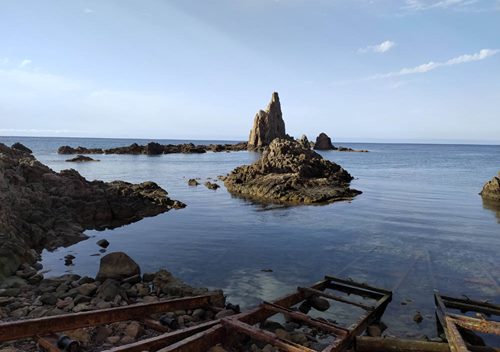
Discover the Cabo de Gata Natural Park on a guided tour from Almería in a small group (max. 8 people), with private transport, a local expert guide, and a picnic featuring local products.
Explore the Salt Flats, the Arrecife de las Sirenas, and other unique landscapes on an unforgettable experience.